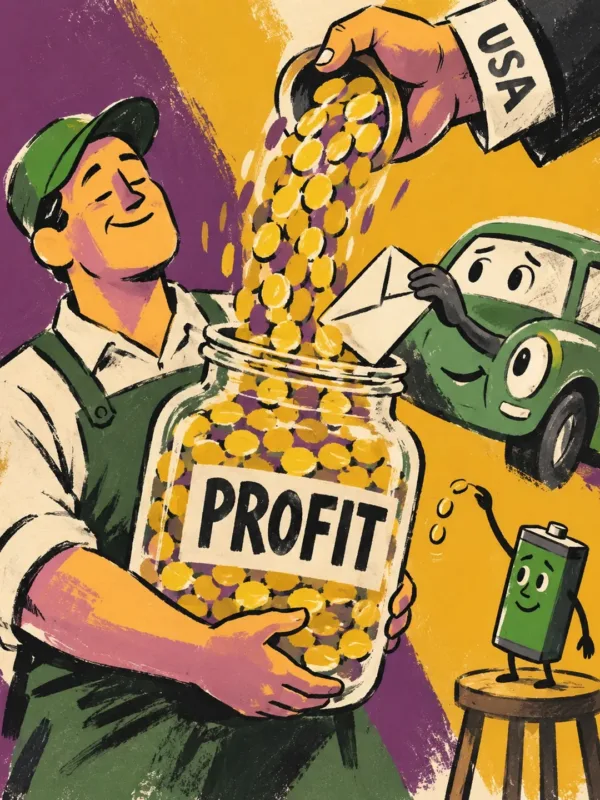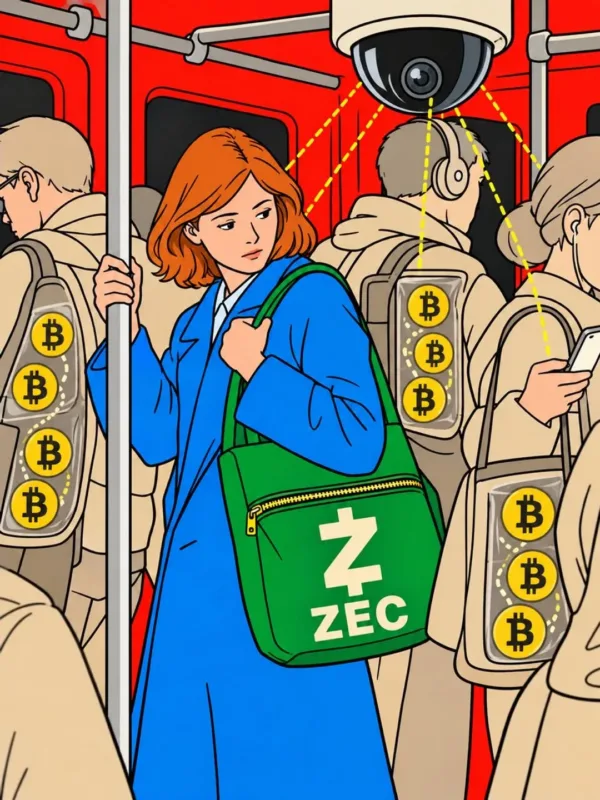
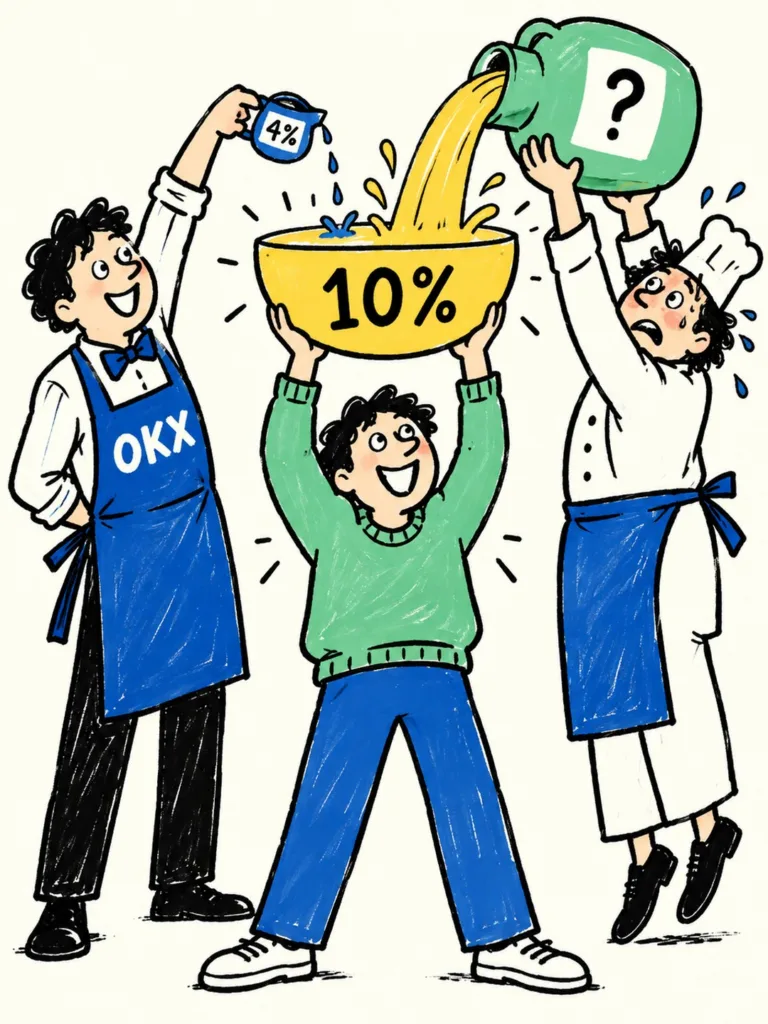
The Federal Reserve, America's central bank, raised its benchmark interest rate by 0.25 percentage point on Sept. 16, to a range of 3.75% to 4%. On Oct. 6, three-month U.S. Treasury bills yielded 4.14% a year. The same day, crypto exchange OKX (valued at $25 billion) unveiled an app called OKX Money that pays up to 10% a year on the dollar coin USDG. You don't even have to lock your money up.
At first glance, it looks like a dollar savings account that pays more than a bank. But the key lies elsewhere. The money sitting behind a dollar coin can earn roughly the Treasury bill rate, and OKX has not said who covers the remaining 6 percentage points or so. A spokesperson declined to comment when asked how the yield is funded.
- What did OKX Money promise?
OKX Money is an app for holding, sending and spending dollar coins. A dollar coin (a stablecoin) is a crypto token built to stay worth $1. Deposit money in any of more than 50 local currencies, and it is converted into dollar coins such as USDG, USDC or USDT. The app is rolling out market by market, starting in parts of Latin America, Africa, South Asia and the Middle East.
Qualifying customers earn up to 10% a year on their USDG balances. Rates vary by region and by customer. Meeting any one of three thresholds, a 30-day average deposit, a 30-day spending amount or a VIP status on the exchange, unlocks a higher tier.
- Where does dollar-coin interest normally come from?
USDG is issued by the Singapore arm of crypto company Paxos. The dollars it receives are held in short-term U.S. Treasury bills, money market funds (funds that invest in short-term debt) and cash. This pool is called the reserves. Paxos shares the earnings from those reserves with partner companies. OKX joined Paxos's dollar network in July 2025.
Think of a storage locker company that, instead of keeping customers' cash in a vault, puts it into Treasury bills and collects the interest. The difference: the company can't hand that interest directly to the people who stored the cash, so it splits it with its partner shops.
The U.S. GENIUS Act (the law that sets the rules for dollar coins) bans issuers from paying interest directly. Rewards paid by exchanges fall outside that ban, which is why banking groups have pushed to restrict those too. The European Union's crypto rules (MiCA) bar both issuers and crypto service providers.
- How big is the gap between 10% and the Treasury rate?
Say you put in $10,000 for a year. At 10%, you would earn $1,000; at the three-month Treasury bill rate (4.14%), about $414. The gap is $586, or about 5.9 percentage points (hypothetical calculation).
Put simply, even if OKX received all the interest the reserves earn and passed every cent to customers, it would cover less than half of the maximum rate it promises. The rest has to come from somewhere else.
- Who covers the remaining 6 percentage points?
There are, for example, two possible routes. One is marketing money: OKX spending its own cash to attract customers. If so, the rate falls when the budget does. The other is earning more by putting deposits to riskier use, such as lending them out. In that case, if borrowers fail to repay, depositors' money could shrink. OKX has not said which it is, or whether it is something else.
There is a clue. OKX also advertises up to 10% a year on the same USDG in its payments app, OKX Pay. According to its promo page, the 10% applies only to the first $10,000; anything above earns 3.5% a year, below the Treasury bill rate. The promotion has no set end date but can be ended at any time. We could not confirm whether OKX Money has the same terms.
Think of a supermarket's "limit two per customer" half-price deal: only the first few items are cheap, to pull shoppers in. The difference: the supermarket clearly eats the loss itself, but when a dollar-coin app doesn't disclose where its interest comes from, customers can't tell who is carrying the cost.
- How did a 20% yield end in 2022?
This isn't the first time people have asked where a high yield comes from. Anchor Protocol (a service that paid interest on deposited crypto) advertised up to 20% interest on the dollar coin TerraUSD (UST). Instead of Treasury bills, UST tried to hold $1 by being swappable for a sister coin, LUNA, making it a so-called algorithmic stablecoin.
In May 2022, UST broke away from $1, and the prices of UST and its sister coins plunged close to zero.
This time the structure is different. USDG is backed by reserves of Treasury bills, money market funds and cash. But one thing is the same: even if a coin holds its $1 value, you still have to ask separately who pays the interest above the Treasury rate.
- BITPRESS Insight
The people whose judgment this news changes are those who reason, "It's a dollar coin, so it's safe," and put money in for a high rate. A dollar coin holding $1 and the promised interest continuing to flow are two separate questions. At OKX Money, the reserves back the first, but no one has yet explained who covers about 6 percentage points of the maximum 10%.
If that share is marketing money, the risk is that the rate shrinks one day. If it comes from putting deposits to work, the risk reaches your principal. The same 10% can carry very different risks.
When you see a rate above Treasury bills, the test is whether anyone has said who pays the difference. If no one has, treat that difference not as a promise but as a bonus that can disappear at any time.
Sources
https://cointelegraph.com/news/okx-money-stablecoin-savings-payments-emerging-markets
https://coincentral.com/okx-launches-stablecoin-app-offering-up-to-10-yield-in-emerging-markets
https://www.federalreserve.gov/monetarypolicy/fomcminutes20260916.htm
https://home.treasury.gov/resource-center/data-chart-center/interest-rates/TextView?type=daily_treasury_bill_rates&field_tdr_date_value_month=202610
https://www.okx.com/learn/earn-apy-usdg
https://www.sec.gov/newsroom/press-releases/2023-32
https://decrypt.co/380281/morning-minute-okx-raises-at-25b-from-circle-ripple-and-stanchart
Glossary
Stablecoin (dollar coin) — A crypto token built to stay worth $1, whose issuer holds the dollars it receives in Treasury bills, cash and similar assets.
Reserves — The Treasury bills, money market funds and cash an issuer keeps so it can redeem each coin for $1.
Three-month U.S. Treasury bill — An IOU the U.S. government repays in three months, used as the benchmark for the safest interest you can earn in dollars.
GENIUS Act — The U.S. law that sets the rules for dollar stablecoins and bans payment-stablecoin issuers from paying interest.
Algorithmic stablecoin — A coin that tried to stay at $1 through swap rules with another coin instead of Treasury bills or cash; TerraUSD (UST) is the best-known example.
BITPRESS articles are information to help your investment decisions, not a recommendation to buy or sell any stock or coin. Investment decisions and their results are your own responsibility.