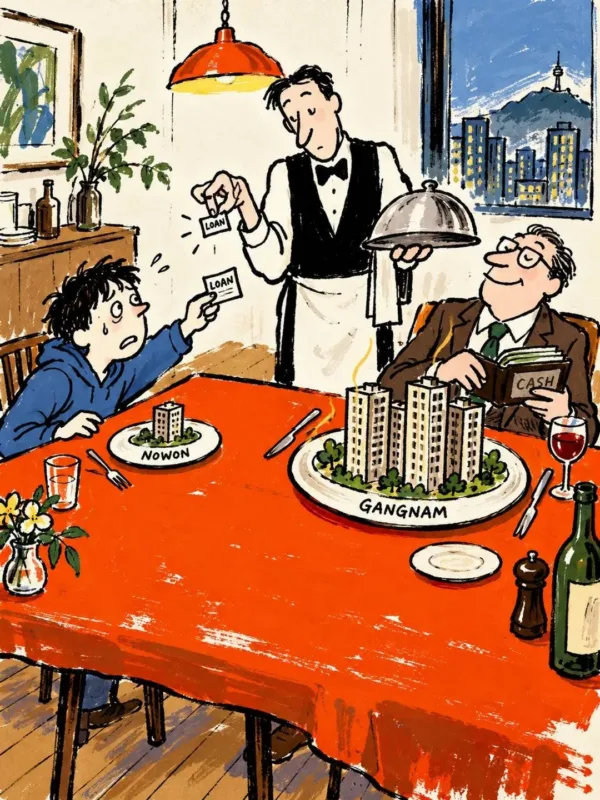

Clients with more than $736,000 (KRW 1 billion) in financial assets at Korea's three big brokerages (Samsung Securities, Mirae Asset Securities and Korea Investment & Securities) net sold KRW 864.8 billion ($637 million) of Samsung Electronics and KRW 716.2 billion ($527 million) of SK hynix in the third quarter (July to Sept.) of 2026 (net selling means selling more than you bought). Samsung Electronics and SK hynix are Korea's two big chipmakers. Together the two stocks come to KRW 1.581 trillion, about $1.16 billion. Dollar figures use 1,358.4 won per dollar (Oct. 2, 2026, KB Think).
In the same period, among clients with KRW 1 billion to under KRW 3 billion ($736,000 to $2.21 million) in financial assets, the 3rd and 4th biggest net buys were two covered call ETFs: KODEX 200 Covered Call Active (KRW 61.8 billion, $45.5 million) and TIGER Dividend Covered Call Active (KRW 47.4 billion, $34.9 million). KODEX and TIGER are ETF brands of the Korean fund firms Samsung Asset Management and Mirae Asset Global Investments. These funds pay out a monthly distribution (money an ETF passes on to its investors), and the buying was read as an attempt to protect returns.
But the key point is elsewhere. A covered call sells off a stock's "extra upside" to someone else and collects a fee for it. So by structure, BITPRESS reads this choice less as "running to safety" and more as a choice that assumes "a market that doesn't rise much for a while."
- What did wealthy investors sell, and what did they buy?
The sellers were all clients with more than $736,000 (KRW 1 billion) in financial assets. Across the three brokerages, Samsung Electronics and SK hynix were the top two net sells. Most of the Samsung Electronics common-share selling came from clients with KRW 3 billion ($2.21 million) or more, who sold more than KRW 750 billion ($552 million) in that group alone.
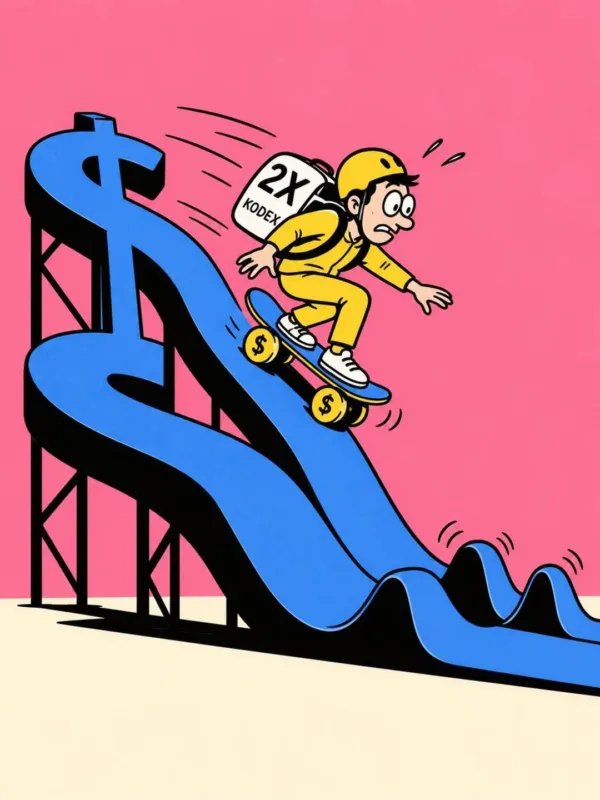
What they bought differed by group. Clients with KRW 1 billion to under KRW 3 billion ($736,000 to $2.21 million) bought two covered call ETFs worth KRW 109.2 billion ($80.4 million). Clients with KRW 3 billion ($2.21 million) or more bought KRW 319.1 billion ($235 million) of Samsung Electronics preferred shares (a share class that trades cheaper than the common shares and pays a higher dividend yield), making them the top net buy, and more than KRW 250 billion ($184 million) of leveraged ETFs, which move at twice the return (twice on the way down too).
Put simply, the KRW 1 billion to 3 billion ($736,000 to $2.21 million) group bought covered calls, while the KRW 3 billion-plus ($2.21 million-plus) group chose preferred shares and a double-sized bet.
- A covered call is money collected for selling the "right to rise"
A call option is "the right to buy at a set price within a set period." A covered call is a strategy of holding a stock while selling that right to someone else. The fee paid for the right is the option premium, and a covered call ETF uses that money to fund its distributions.
Think of a house. Say you own a $500,000 house and sell a neighbor "the right to buy it for $525,000 within a month," collecting a $10,000 deposit. If the price stays put, the deposit is all yours. If the house jumps to $600,000, you must hand it over at $525,000 and miss everything above that. (The figures are an illustration scaled to dollars; the percentages match the 5% and 2% used in the next section.)
There is a difference, though. A covered call ETF doesn't hold one house; it makes contracts on a basket of stocks. KODEX 200 Covered Call Active chooses among daily, weekly and monthly options to suit market conditions.
- Rising, flat or falling: how do the results split?
Take a hypothetical example. You hold $1,000 of stock and sell a right to buy it at a price 5% higher within a month, collecting $20 (2%). The 2% is an assumed figure for illustration. Unlike a real ETF, the example simplifies by selling the right on all of the stock, and it leaves out taxes and fees. (Dollar amounts are scaled for illustration; the percentages are unchanged.)
If the stock rises 10% after a month, someone holding only the stock makes $100. The covered call must give up the part above 5%, which is $50, so it keeps the other $50 plus the $20 premium, $70 in all. If the price is unchanged, stock-only earns $0 and the covered call earns $20. If it falls 10%, stock-only loses $100 and the covered call loses $80.
Put simply, a covered call beats holding the stock alone when the price stays below the agreed price. It earns less in a big rise, and in a fall it loses only as much less as the premium it received.
- A 2% monthly payout is not bank interest
KODEX 200 Covered Call Active, listed on July 14, 2026, paid KRW 153 per share ($0.11) in its first distribution at the end of July, a monthly distribution rate of about 2.0%. That is only one payout so far. TIGER Dividend Covered Call Active has paid around 2% a month since it introduced special distributions in the second half of last year (2025), and its September distribution is KRW 425 per share ($0.31). Adding 2% for twelve months gives 24% a year, but that is only a sum of payouts, not an investment return.
TIGER Dividend Covered Call Active says most of its distributions come from stock trading gains and option premiums. The manager's notice says: "If distributions exceed profits, the invested principal may decrease." A high distribution rate does not mean a high return.
Taxes need to be split up too. Option premiums on Korean stocks are tax-free and are excluded from comprehensive financial income taxation (a system that adds interest and dividend income above a set amount to other income and taxes it at higher rates), but the part of a distribution that comes from stock dividends is taxed at 15.4%. For TIGER Dividend Covered Call Active, trading gains and option premiums made up a large share of the past year's distributions, so 96.5% was tax-free.
- What kind of market does buying covered calls assume?
In the third quarter, Korean stocks swung sharply and then stayed in a range-bound market (prices moving up and down only within a set band). As section 3 showed, a covered call beats holding the stock alone when prices don't rise much. While all clients above KRW 1 billion ($736,000) were selling the chip leaders, the KRW 1 billion to 3 billion group bought covered calls, which by structure can be read as a choice that assumes such a market.
Not every wealthy investor stood on the same side, though. While the KRW 1 billion to 3 billion group loaded up on covered calls, the KRW 3 billion-plus group bought preferred shares and leveraged ETFs. Park Jin-young, a PB at Samsung Securities (a private banker who manages wealthy clients' assets), called this choice among ultra-rich investors a "barbell strategy" (weighting both safe and aggressive assets, like the two ends of a barbell).
TIGER Dividend Covered Call Active's year-to-date cumulative return including distributions was 85.19% (announced Sept. 28), the highest among covered call ETFs listed in Korea. That figure mixes in the rise of the stocks it holds, so it cannot be credited to the covered call structure alone. The manager points to its active management, selling fewer options when it expects prices to rise.
- BITPRESS Insight
A covered call distribution is the price of selling the "big rise" in advance. So BITPRESS reads the KRW 109.2 billion ($80.4 million) of covered call net buying by the KRW 1 billion to 3 billion group not as "the rich got safer" but as a choice weighted toward "a market without a big rise for a while."
In that kind of market, a covered call comes out ahead of holding the stock alone by the amount of the premium. But distributions are not guaranteed, and if prices fall you lose only as much less as the premium you received, and carry most of the loss. If chips surge again, you give up part of the upside.
The test for choosing a covered call is not the distribution rate but whether you agree that "prices won't rise much for a while."
Sources
https://www.hankyung.com/article/2026100426691
https://www.hankyung.com/article/2026100426991
https://www.samsungfund.com/etf/insight/newsroom/view.do?seq=77713
https://www.mt.co.kr/stock/2026/07/29/2026072910292855598
https://www.fnnews.com/news/202609280929515298
https://biz.newdaily.co.kr/site/data/html/2026/09/28/2026092800066.html
Glossary
Covered call — A strategy of holding a stock while selling someone the right (a call option) to buy it at a set price, collecting a fee; you give up part of a big rise in exchange for monthly cash.
Call options — The right to buy an asset at a set price within a set period; the buyer gains more the higher the price goes.
option premium — The fee the seller of an option receives, and the main source of a covered call ETF's distributions.
Distributions — Money an ETF passes on to investors from the dividends and gains it earns; paying out more than it earns can shrink the principal.
Barbell strategy — A way of investing in both safe and aggressive assets; a Samsung Securities private banker used the term for how ultra-rich clients held preferred shares and covered calls together with leveraged ETFs.
Samsung Electronics and SK hynix — Two Korean chipmakers whose shares were the top two net sells in this analysis.
KODEX and TIGER — Brand names of ETFs listed in Korea: KODEX is Samsung Asset Management's and TIGER is Mirae Asset Global Investments'.
Preferred shares — A share class that usually trades cheaper than a company's common shares and pays a higher dividend yield.
BITPRESS articles are information to help your investment decisions, not a recommendation to buy or sell any stock or coin. Investment decisions and their results are your own responsibility.