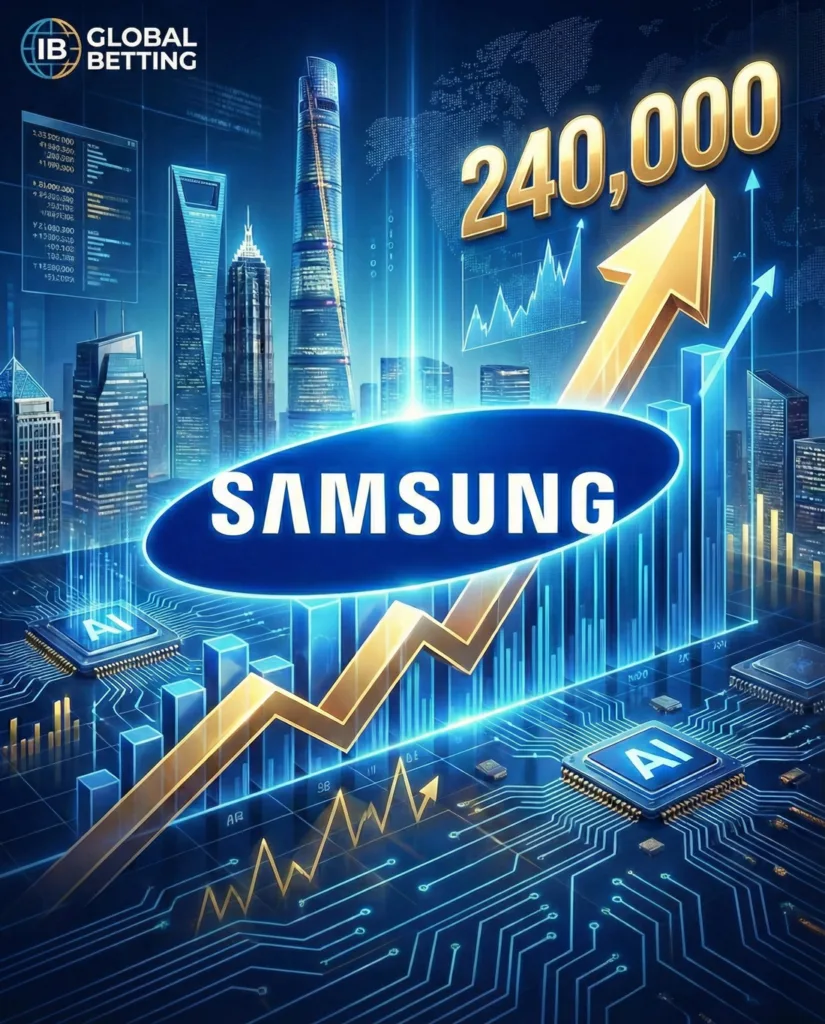
Global investors are more bullish on Samsung Electronics than ever. Price targets that had long been stuck in the KRW 100,000 range have recently been raised as high as KRW 240,000, led by foreign investment bank Macquarie, sending a shock through the market. That implies more than double the upside from the current share price, and the prevailing analysis is that Samsung Electronics has moved beyond a simple memory recovery to take real leadership in the AI chip market.
1. The basis for Macquarie’s KRW 240,000 price target
Macquarie, the source of this upgrade, sharply raised its Samsung Electronics price target from KRW 170,000 to KRW 240,000 and named it its top pick in the sector. The core of Macquarie’s report is an unprecedented memory chip shortage set to take hold from 2026. As the global race to build out AI servers intensifies, demand for high-performance DRAM is exploding, and Macquarie expects Samsung’s overwhelming production capacity to maximize its pricing power in the process. In particular, the view that commodity DRAM prices will rise far more than the market expects, sending profitability soaring, is behind the KRW 240,000 figure.
2. HBM4 qualification and the dawn of KRW 100 trillion in operating profit in 2026
KB Securities also set a KRW 200,000 price target for Samsung Electronics, issuing a bold forecast that its 2026 annual operating profit will reach KRW 145 trillion. At the heart of this optimism is HBM4, the sixth generation of high-bandwidth memory. Samsung Electronics is expected to complete final quality qualification for HBM4 within the first half of 2026 and begin full-scale supply to global Big Tech companies, including Nvidia. According to KB Securities’ analysis, Samsung’s HBM revenue in 2026 will more than triple from the previous year to about KRW 26 trillion, meaning Samsung Electronics has fully moved from the edge of the AI chip market to its center.
3. Global supply chain reshuffle and when Samsung Electronics' undervaluation ends
Putting market data and technology trends together, Samsung Electronics' stock is most likely to enter a full re-rating phase around the third quarter of 2026. Until now, Samsung Electronics has traded at a price-to-earnings discount of roughly 40 percent or more against its global rivals, weighed down by doubts over its technology and yield problems. But as yields stabilize on its 1c-nanometer DRAM process and its share of the next-generation memory market visibly grows, that discount is expected to fade quickly. Analysts say that if Samsung Electronics' price-to-book ratio recovers only to 1.8 times, the average during the last supercycle, a move into the mid-KRW 200,000 range is well within reach.
BITPRESS Insight
The KRW 240,000 target price for Samsung Electronics means more than a number. It is evidence that global capital markets have begun to accept that years of talk about a Samsung Electronics crisis are over, and that its position as a core infrastructure supplier for the AI era is secure. The key point in BITPRESS's analysis comes down to yield and the timing of mass production. The HBM4 qualification results expected in the first half of 2026 will be the final piece of the puzzle that decides where the stock goes. Rather than reacting to every short-term swing, investors should take a long view and watch how much global big tech spends on infrastructure and whether Samsung Electronics' next-generation process settles in.