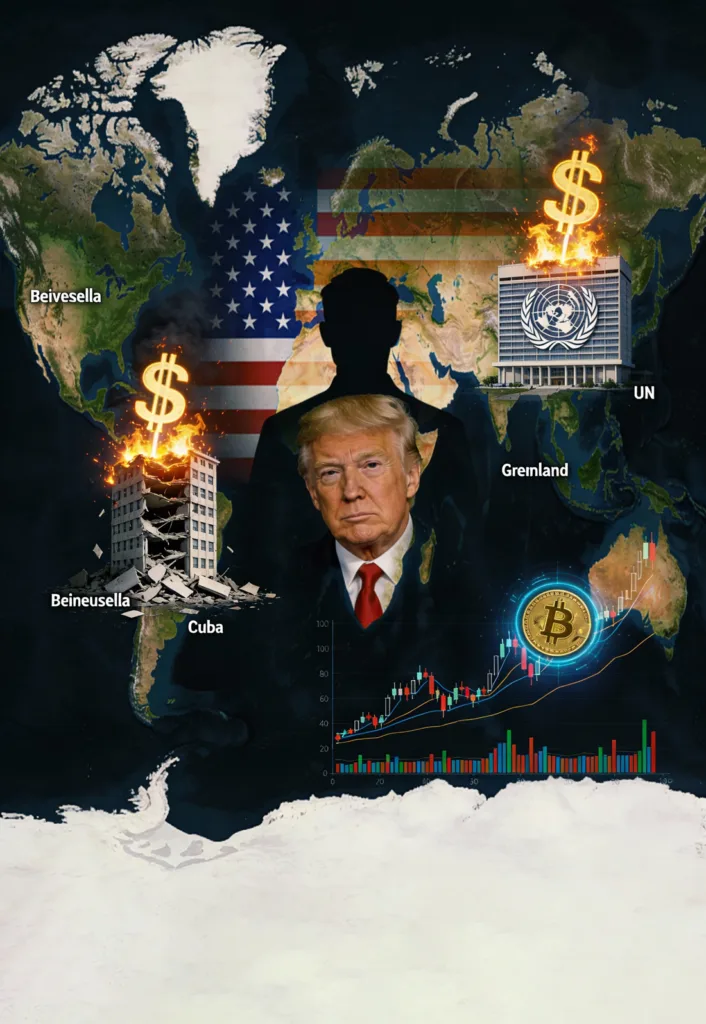
The U.S. withdrawal from UN-related bodies and the Venezuela, Cuba and Greenland issues are better seen not as “mere diplomatic events” but as a strategy to cut America's external risks and costs and redistribute resource and security gains. If this strategy works to some degree, over the medium to long term it is likely to raise inflation pressure and geopolitical volatility while also creating ‘relative’ strength for U.S. assets and U.S.-driven risk assets (especially U.S. stocks and dollar-based crypto).
1. What is the U.S. doing by leaving the UN and international organizations?
- The Trump administration announced over 2025–2026 that it would withdraw from or stop funding 66 international and UN-related organizations.
- They include the WHO, the UN Human Rights Council and many climate, environment and development bodies, and the logic is that the U.S. “will not spend money on organizations that work against American interests and infringe on its finances and sovereignty.”
- At the same time, it is pursuing a renewed exit from the Paris climate agreement and cuts to UN climate, health and human rights programs, and has declared it will redirect resources to domestic infrastructure, military power, border control and industrial protection (tariffs and manufacturing reshoring).
2. Venezuela, Cuba, Greenland: the “hegemony, resources, security” triangle
- The U.S. intervened in Venezuela's regime change by ousting Maduro in a military operation, then sent Cuba's government a stern warning that it has been “pushed to its economic and political limits,” signaling tougher sanctions and pressure.
- Venezuela, with its vast oil and resources and strategic location in the Western Hemisphere, and Cuba, a geopolitical lever for Caribbean security right off the U.S. mainland, are both key targets for managing American dominance in the Americas.
- President Trump again showed his intent to ‘bring Greenland into the U.S.’ or tighten effective control over it, calling it “an essential security asset for checking Russia and China that Denmark cannot handle.”
3. What the strategy aims for: a macroeconomic view
From a macro perspective, the core goals come down to four.
- Redistributing fiscal spending and resources
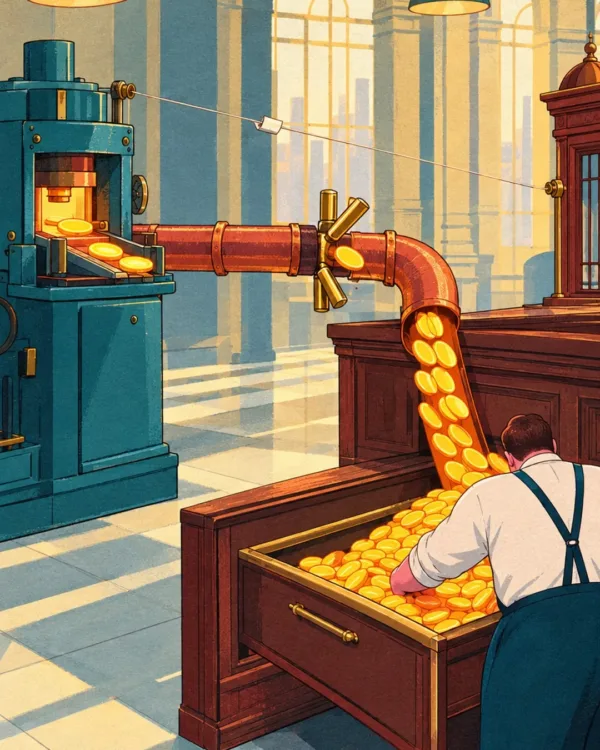
- It is an attempt to cut spending on international organization dues and global public goods (health, human rights, development aid, climate) and redirect that money to domestic infrastructure, the military and borders, and industrial protection (subsidies and tariff defense), spending that directly boosts “domestic growth and jobs.”
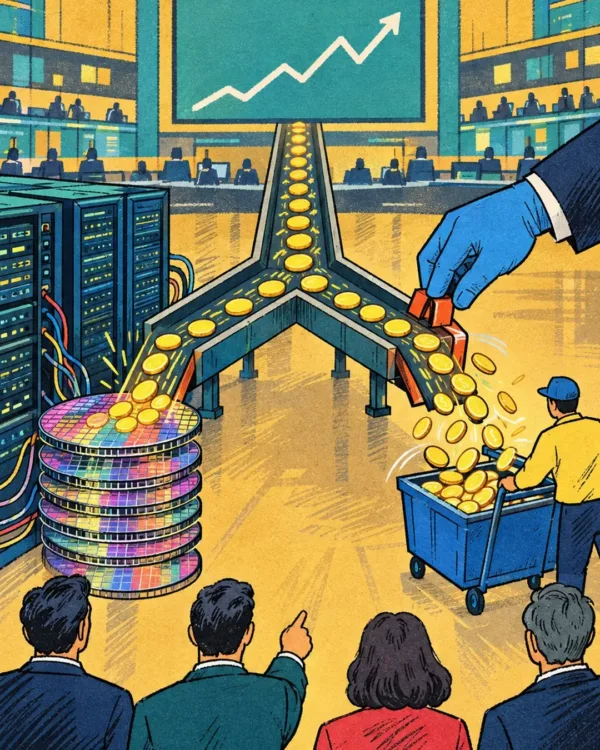
- In the short term, this can prop up U.S. aggregate demand and lift revenue in defense, energy and infrastructure, supporting listed companies' earnings.
- Tighter control over supply chains and energy
- Regime change in Venezuela and pressure on Cuba can be seen as a move to expand influence over energy and sea lanes in the Americas and rebuild a “pro-American resource supply chain.”
- Greenland matters for its rare earths and minerals and as a base for Arctic shipping routes, missile defense and radar, so over the long term it could help stabilize U.S. supply chains for energy, defense, semiconductors, batteries and advanced manufacturing.
- Keeping the dollar and U.S. assets relatively attractive
- Weakening the UN and multilateral system raises global governance risk, but it also reconfirms that there is no clear “place for money to run in a crisis” other than the U.S. and the dollar.
- In other words, the more unstable the world becomes, the stronger the paradox that U.S. Treasuries, U.S. stocks and dollar assets look attractive as a ‘relative safe haven.’
- Political message: sovereignty and rejecting global governance
- At home, it taps into resentment that “the UN in New York and international bodies in Geneva, not Washington, rule America,” aiming to rally its political base.
- Abroad, it signals that “America still makes the rules, and if you don't like it, try doing it without America,” pushing to make bilateral and bloc-style negotiations (tariff and security deals) the default format instead of the multilateral system.
4. How it connects to the current U.S. macro economy
- From 2025 onward, the U.S. economy is expected to grow modestly, at around 2% and about 1.9% in 2026, with inflation of 2.8–3.1%, ‘above target.’
- One of the main drivers of inflation is seen as “high tariffs and the cost of supply chain restructuring,” and the Fed, having already cut its benchmark rate by 150bp in 2025, is expected to take a fairly cautious easing stance in 2026 with only limited further cuts.
- In short, high tariffs, industrial policy, bigger defense spending and pro-American supply chains help defend growth, but structurally they add to price and fiscal pressures, creating an environment where it is hard for the Fed to cut rates very aggressively.
5. If the scenario succeeds: the impact on U.S. stocks and crypto
Assuming success, the premise is that “the U.S. reduces its reliance on international organizations while taking control of assets in the Americas, the Arctic, energy and security, and maintains moderate growth and manageable inflation without a recession.”
Impact on U.S. stocks
- Sectors that benefit structurally
- Energy (oil, gas, pipelines, services): expectations of development in Venezuela and the Arctic, and relocation within the Americas supply chain, could boost medium- to long-term CAPEX.
- Defense, space and cybersecurity: rising security risks around Cuba, Venezuela and the Arctic could push up defense budgets and export demand from allies.
- Infrastructure, industrials and reshoring manufacturers: if money flows to domestic infrastructure and manufacturing instead of international organization budgets, CAPEX and jobs hold up and earnings are likely to improve.
- What it looks like at the index level
- In an environment where growth is steady at around 2% but inflation stays sticky near 3%, a “reflation-style market” could emerge in which value, dividend and real-asset-linked sectors show relative strength.
- Despite rising geopolitical risk, if Europe and emerging markets take a bigger hit, a “relative U.S. premium” could hold, and the S&P 500 and Nasdaq may repeatedly see money flow back in after corrections.
Impact on crypto
- Risk-on and risk-off happening at the same time
- Distrust of global governance and a weaker UN system reinforce the story that “rules made by states are hard to trust,” which could strengthen the narrative of Bitcoin and on-chain assets as a ‘political hedge.’
- But because U.S. regulatory, tax and sanctions powers become relatively more important, the risk also grows that the U.S. could tightly squeeze dollar on/off-ramps, exchanges and stablecoins whenever it chooses.
- Possible scenarios by asset class
- Bitcoin: its long-term story as “digital gold + a hedge against U.S. political risk” may strengthen, but short-term volatility spikes (if not on the scale of LUNA or FTX) could become more frequent whenever U.S. regulatory events hit.
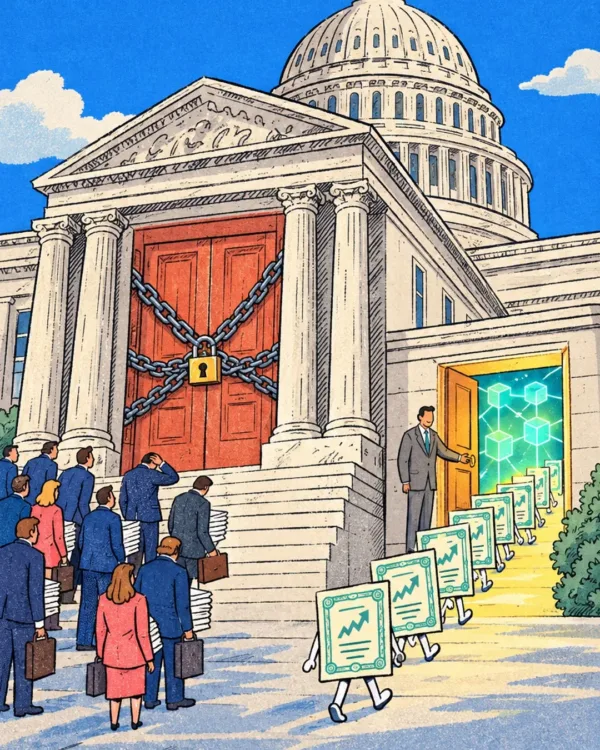
- Ethereum, L2s and infrastructure coins: if DeFi, tokenized securities and on-chain finance in the U.S. become more entangled with the mainstream system, they could benefit gradually once regulatory clarity arrives, but issues such as whether they count as securities and KYC requirements could deepen a selective split between winners and losers.
- Stablecoins: the more global uncertainty grows, the greater the demand for “dollar stablecoins,” but they could also be used more actively as U.S. AML and sanctions tools, so specific issuers and chains will always carry the risk of a regulatory shock.
Related article links
- White House fact sheet – President Donald J. Trump Withdraws the United States from International Organizations That Are Contrary to the Interests of the United States
- White House presidential document – Withdrawing the United States from International Organizations, Conventions, and Treaties That Are Contrary to the Interests of the United States
- International broadcaster – Trump withdraws US from key climate treaty and dozens of international organisations
- International news outlet – Which are the 66 global organisations the US is leaving under Trump
- International news outlet – Trump to withdraw US from dozens of UN, international organisations
- International radio outlet – Why is the U.S. pulling out of 31 U.N. groups?
- International broadcaster – US has ‘legal obligation’ to pay dues, UN tells Trump
- Global news agency – After Maduro, who’s next? Trump spurs speculation about his plans for Greenland, Cuba, Colombia
- Global business outlet – Venezuela and the president’s new world order vision involving Cuba and Greenland
- International news channel – Live coverage on developments in Venezuela and Greenland under the current US administration
- Asset manager report – Outlook 2026
- Investment bank report – US Outlook 2026: Balancing Accelerating Growth and Sticky Inflation
- Global brokerage report – 2026 Economic Outlook: Moderate Growth
- Business magazine – What The U.S. Withdrawal From 66 International Bodies Means For American Business
- Global research – 2026 Market Outlook