1. This relationship is a "strategic alliance," not an "equity investment"
First, one thing needs to be clear.
Samsung is neither a major shareholder of **Coinbase** nor directly involved in its management.
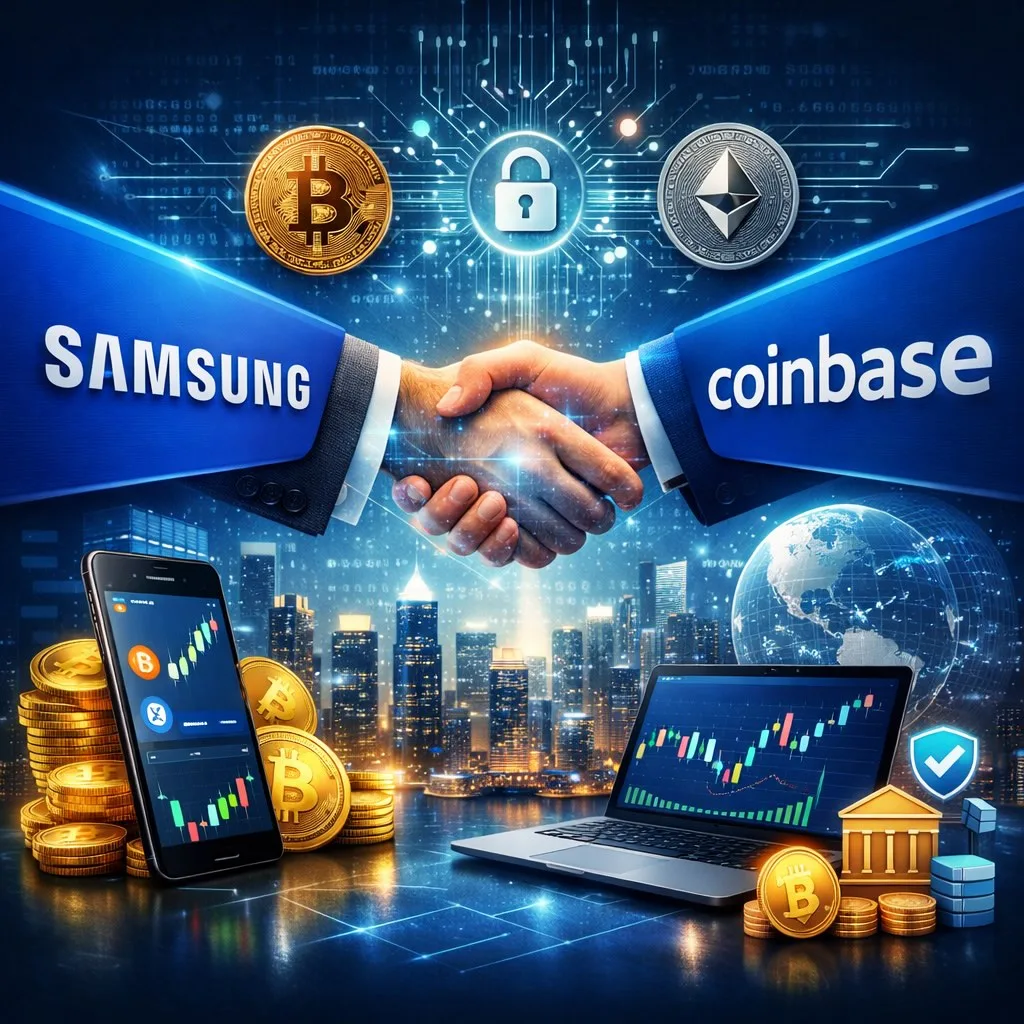
Even so, the relationship keeps coming up because there is a strategic link at the level of technology, platforms and financial infrastructurebetween them.
The ties between Samsung and Coinbase come down to three things.
- Samsung's security, hardware and operating system (OS)
- Coinbase's regulation-friendly global crypto financial infrastructure
- and the shared direction of "bringing crypto into mainstream finance"
In Korea, this is structurally very similar to the Naver–Upbit relationship.
2. Why Samsung needs Coinbase
Samsung's core goal is simple.
The strategy is **"Don't do crypto directly; control the infrastructure crypto can't do without."**
Samsung is already deeply involved in the following areas.
- Samsung Blockchain Keystore: storing private keys on smartphones
- Security chips (TEE, Knox): the core of digital asset security
- Mobile, wearables and payments ecosystem: the area likely to become the interface for digital assets
There is one problem.
"Who will be the financial partner that actually moves money on top of this infrastructure?"
This is where Coinbase comes in.
- The exchange closest to U.S. regulators
- Accumulated experience with institutional investors, ETFs and custody
- A structure closer to a digital asset bank than a "crypto exchange"
For Samsung, it means
👉 securing a standard partner in global crypto finance
👉 without taking on regulatory risk.— that is what it amounts to.
3. Why Coinbase needs Samsung
Coinbase's challenge, on the other hand, is clear.
- Crypto is still a difficult, unsettling and unfamiliar asset for the public
- A single app has limits in reaching the global mass market
Samsung can solve this problem in one stroke.
- Hundreds of millions of smartphones sold each year
- Enormous influence in the Android camp
- The trust that comes with being "preinstalled on Samsung"
For Coinbase, Samsung is
👉 a brand that lends trustand a
👉 and the most powerful onboarding channel..
This is exactly the same structure Upbit gained through Naver.
4. Structural similarities with Naver–Upbit
| Category | structurally very similar to | Samsung–Coinbase |
|---|---|---|
| Core role | Traffic and platform | Hardware and security |
| Financial partner | Upbit | Coinbase |
| Strategy | Doesn't do finance directly | Doesn't do crypto directly |
| Goal | Maximize platform value | Control the infrastructure standard |
The common thread is clear.
"Leave the riskiest areas (finance and regulation) to a partner,
and control the most stable areas (platform and infrastructure) yourself."
This is the typical way Big Tech approaches crypto.
5. The real change this structure signals
The relationship points to three key insights.
- Power in crypto is shifting from "coins" to "infrastructure"
- Exchanges' power increasingly depends on brands and platforms
- The final winner will be whoever has "regulation + technology + distribution" all at once
Samsung and Naver
👉 don't need to hold Bitcoin
👉 to profit as the crypto market grows.
6. BITPRESS Insight
When looking at the crypto market,
there is a more important question than "Which coin will go up?"
"Who holds the gateway to this market?"
- In Korea, Naver–Upbit
- Globally, Samsung–Coinbase
As long as this structure holds,
crypto is likely to be absorbed increasingly **as a "platform function" rather than a speculative asset**.
And this change
👉 ahead of prices,
👉 **has already begun in corporate strategy and partnerships