On Sept. 15, the Clarity Act, a U.S. crypto market bill meant to set trading rules and decide which regulators would oversee what, was blocked 49 to 50 in a procedural vote in the Senate. It needed 60 votes to move to the next stage. On the news, shares of Coinbase, a U.S. crypto exchange listed on the stock market under the ticker COIN, fell 10.1% to close at $172.11.
The common reading goes like this: a law the industry had waited years for has collapsed, so the whole crypto industry loses, and the biggest exchange gets hurt the most. Judging by the stock price right after the vote, that is how it looks.
But the real story lies elsewhere. Government agencies are quickly filling the gap the law left, while the framework that would let new competitors in is delayed. That is why some analysts argue that exchanges that are already established are, if anything, protected.
- What was the Clarity Act meant to do?
The Clarity Act was meant to make most crypto activity in the U.S. legal and to spell out what the SEC (the U.S. Securities and Exchange Commission) and the CFTC (the U.S. Commodity Futures Trading Commission) would each be responsible for. Sen. Cynthia Lummis, the bill's leading champion, said on the day of the vote, "It's over."
The bill can be brought up for another vote. But it would need 60 votes again, and at the time of the vote, Congress had about three working weeks left before midterm campaigning. Even if it passed the Senate, the House would have to agree on the same wording.
- Who is filling the gap the law left?
On Sept. 17, two days after the vote, the SEC issued a five-year "innovation exemption." It is an exception that lets qualifying trading venues buy and sell U.S. stocks turned into tokens on a blockchain. On Oct. 1, it proposed a custody rule that would let state trust companies hold customers' crypto for safekeeping.
On Oct. 5, the CFTC began asking for public comment on rules for leveraged crypto trading by individuals and on a new registration category for crypto markets. This is not a rule taking effect, though. It is the start of a long process of gathering comments and writing rules.
Put simply, within 20 days of the bill's failure, the agencies rolled out three things, an exemption, a proposed rule and a request for comment, but the framework covering the whole crypto market is still under construction.
- Why do some analysts say Coinbase isn't the loser?
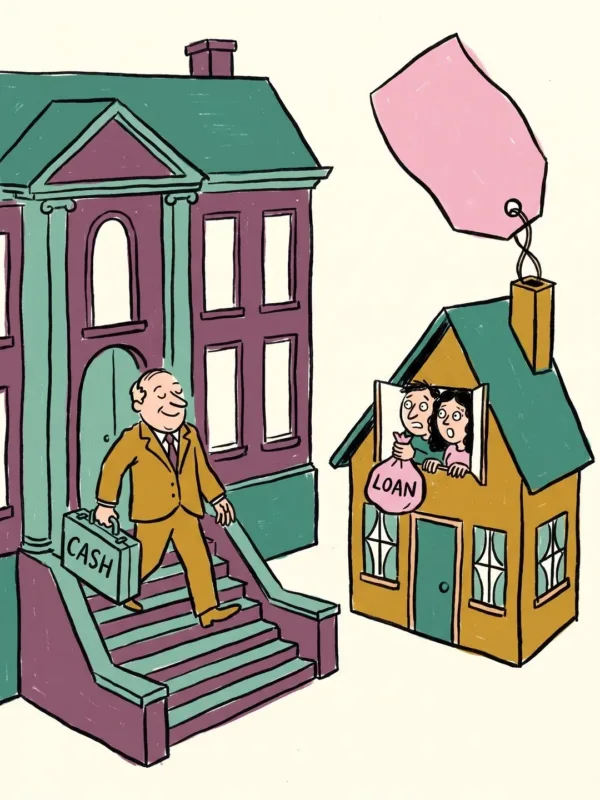
Matt Hougan, chief investment officer at Bitwise, argued that the Clarity Act's failure protects the "regulatory moat" of established players such as Coinbase and Kraken, another crypto exchange. His point is that competition that could push costs down will arrive later.
Here is how it works: the law is blocked → the new registration category for crypto markets that the CFTC mentioned stays at the comment stage → if Hougan is right, big exchanges already in business face cost-cutting competition later.
Think of a neighborhood bakery. If the town keeps delaying its rules for licensing new bakeries, the bakeries already open keep their customers to themselves longer. One difference: unlike a bakery license, agency rules can be rewritten when a new administration takes office.
- What did the drop mean for your money?
On news of the vote, Coinbase shares fell 10.1%. Someone holding 10 million won (about $7,470) worth would have lost about 1.01 million won (about $755) (a hypothetical calculation that ignores exchange-rate changes). Robinhood fell 3.4%.
Yet Hougan argued that agencies writing the rules is better than a law in the short term, because even if the law had passed, writing the follow-up rules would have taken years. The stock reacted first as if the bill's failure were simply bad news, but Hougan was looking at when competition would arrive.
- What is the weakness of agency rules?
Agency rules are like notices from an apartment building's management office. They come out faster than the bylaws residents vote on (the law), but they can change when a new building manager comes in. That is why CFTC Chairman Michael Selig also wants a law, so the next administration would have a hard time reversing course. Kevin Kreuzer, general counsel at D3, likewise said agency actions cannot provide certainty as lasting as a law.
Gaps remain, too. Ordinary spot crypto trading without leverage still has no comprehensive federal oversight beyond enforcement against fraud and market manipulation. Filling that gap was the Clarity Act's main goal. Lev Breydo, a professor at William & Mary Law School, said only Congress can build a comprehensive framework with legal staying power.
- BITPRESS Insight
When a regulatory bill fails, it is easy to assume the whole industry loses by the same amount. But when the law is blocked and agency rules fill the gap, big exchanges that are already established meet new competitors later and feel pressure to cut costs later too. The losses may fall more heavily on the new companies that wanted to enter and on users waiting for lower costs.
On the other hand, agency rules can change when the administration changes, so the big exchanges' moat will not last forever.
When crypto regulation news comes out, first ask "who is shielded from competition because of this?" before asking "is this good or bad news?"
Sources
https://www.coindesk.com/policy/2026/10/11/clarity-s-failure-could-speed-crypto-innovation-while-shielding-incumbents
https://decrypt.co/378283/clarity-act-fails-senate-hurdle
https://www.blockhead.co/2026/09/16/clarity-act-fails-senate-cloture-vote-sending-crypto-stocks-sharply-lower/
Glossary
CLARITY Act — A bill that would have set trading rules for the U.S. crypto market and divided duties between the SEC and the CFTC; it was blocked in a procedural Senate vote on Sept. 15.
Procedural vote (cloture) — A Senate vote on whether to end debate on a bill and move it to the next stage; it needs 60 votes to pass.
Regulatory moat — The protection established companies enjoy when rules make it hard for new competitors to enter, likened to the moat of water around a castle.
Innovation exemption — A five-year exception from the SEC that lets qualifying trading venues trade U.S. stocks turned into tokens on a blockchain while the agency writes formal rules.
Custody — Holding customers' crypto or other assets on their behalf and keeping them safe.
BITPRESS articles are information to help your investment decisions, not a recommendation to buy or sell any stock or coin. Investment decisions and their results are your own responsibility.