
Since Sept. 14, people in Korea can buy and sell stocks on the Korea Exchange in real time after work, from 4 to 8 p.m. Over the 16 trading days through Oct. 8, this evening market traded an average of 1.2645 trillion won ($941 million) a day, and 89.4% of that came from individual investors.
So it is easy to see the evening market as a small market where retail investors trade with each other. But the real point lies elsewhere. In Samsung Electronics, the stock individuals bought most, and SK hynix, the stock they sold most, foreign investors moved in the opposite direction by net value.
- Why was an evening stock market created?
On Sept. 14, the Korea Exchange scrapped its 4-6 p.m. after-hours single-price session (which pooled orders and filled them at one price at set times). In its place it opened an after-market where stocks trade in real time from 4 to 8 p.m. Stocks that could not be traded in the evening on Nextrade, Korea's alternative exchange (a company that runs stock trading separately from the Korea Exchange), can now trade live in the evening too. Nextrade's evening session was bigger over the same period, at 1.7008 trillion won ($1.27 billion) a day; all figures in this article are for the Korea Exchange's evening market.
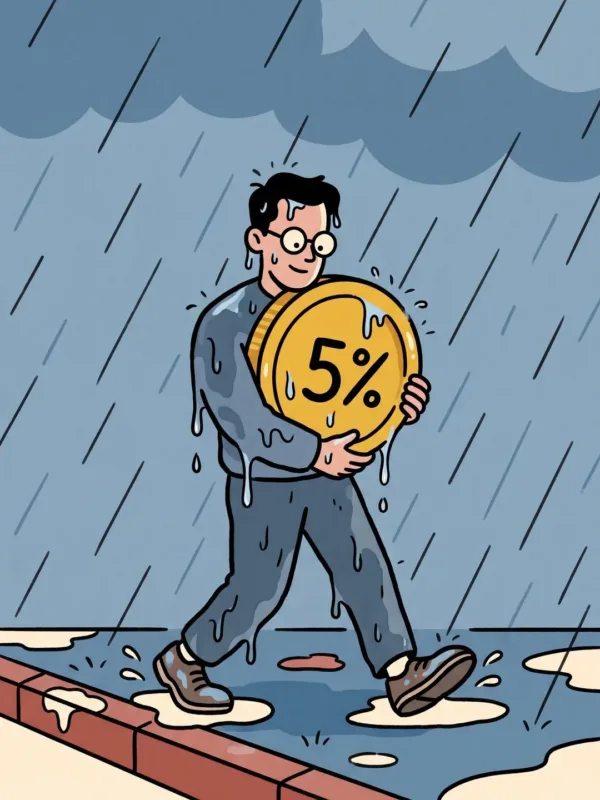
Still, it is small. The Korea Exchange's evening trading value was about 4.78% of the regular daytime session. Put simply, for every $100 traded by day, about $5 changes hands in the evening.
- Who sold the stocks retail investors bought?
From Sept. 14 to Oct. 8, the stock individuals net bought most in the evening market (the amount bought minus the amount sold) was Samsung Electronics preferred shares (Samsung shares that carry no vote on company matters but pay a slightly higher dividend), at 72.3 billion won ($54 million). Second was Samsung Electronics common stock at 67.53 billion won ($50 million). The stock they sold most was SK hynix, with net sales of 92.14 billion won ($69 million).
Foreign investors moved the other way. They net bought 101.54 billion won ($76 million) of SK hynix, their top pick, and net sold 83.11 billion won of Samsung Electronics preferred and 50.49 billion won of common shares. Put simply, while individuals bought Samsung and sold SK hynix, foreigners bought SK hynix and sold Samsung.
Net buying figures don't show who was on the other side of each individual trade. Still, the numbers confirm that foreigners, who made up only 7.9% of evening trading value, stood on the exact opposite side of individuals in these two stocks, by similar amounts.
- By day, both groups were selling these stocks
During regular daytime trading over the same period, Samsung Electronics and SK hynix were the top two net sells for both individuals and foreigners. Two stocks that both groups were selling by day, individuals and foreigners traded in opposite directions in the evening.
The exchange data does not say why they split only in the evening. What is confirmed is that even in the same two stocks, money flowed in a different direction in the evening than by day.
- When the other side is thin, prices jump
A stock trades only when an order saying "I'll sell at this price" meets one saying "I'll buy at this price." When few people are trading and not enough orders are waiting, even a small order can move the price a lot.
Say you want to buy 100 shares of a 10,000-won stock, but only 30 shares are offered at 10,000 won and the next offer is 10,500 won. To get all 100, you have to put in a price of up to 10,500 won, and the other 70 shares cost 5% more, or 35,000 won extra (70 shares x 500 won; example math). It is like a market stall just before closing: with little left on the shelf, it is hard to haggle. One difference: from its launch, the evening market has accepted only limit orders, where you set the price, so you never pay more than the price you write. If no one sells at that price, though, you don't get the shares.
In fact, on the evening market's first day, volatility interruptions (VI) were triggered 1,112 times across stocks (Yonhap's count; another count including duplicates put it at 1,637), falling to 426 on Oct. 8. The exchange said the VI rules are the same as in regular trading and that it is hard to say they fired more because of the after-market, but added that with fewer participants and a first-day effect, some stocks briefly ran short of liquidity. One office worker in his 20s said, "With less movement in the order book (the list of waiting buy and sell orders) than in regular trading, I sometimes couldn't tell whether trading was even happening."
- What changes next?
A week after launching the after-market, the exchange set up a nine-person "after-market special surveillance task force" covering monitoring, prevention and short selling, which will run through the end of the year. In the US, Nasdaq plans to start trading 23 hours a day, five days a week, on Dec. 6 (local time).
Jung Su-min, a research fellow at the Korea Capital Market Institute, said, "Korea, too, needs to look at whether there is enough demand to secure liquidity for a night market (beyond the after-market)." Timothy Cuddihy, chief risk officer of the US Depository Trust & Clearing Corporation (DTCC, which handles settlement of US stock trades), also warned that longer hours can spread trading across time slots and leave markets short of liquidity. He stressed that what matters is not simply whether markets can trade longer, but whether clearing, settlement, market surveillance and incident response can support them.
- BITPRESS Insight
Judging only by the fact that 89.4% of the evening market is individuals, it looks like a small market of retail investors trading with each other. But in the two stocks individuals traded most, foreigners, at just 7.9% of trading value, stood on the opposite side by similar amounts. Individuals placing orders after work were facing money moving in a different direction than by day, in a market that trades about 5% as much as the daytime session.
That doesn't mean buying in the evening is a losing move. But even for the same stock, fewer people are there to take your order in the evening, so a single order of yours can move the price.
So when you place an evening order, it is more accurate to ask first not "should I buy or not?" but "are there enough people to take my order at this price?"
Sources
https://www.yna.co.kr/view/AKR20261009005000008
https://newstomato.com/ReadNews.aspx?no=1313695
https://www.fnnews.com/news/202609142043031869
Glossary
After-market — A Korea Exchange evening session where stocks trade in real time from 4 to 8 p.m., after the regular daytime session ends.
Net buying / net selling — The amount bought minus the amount sold; a positive figure is net buying and a negative one is net selling.
Preferred shares — Shares that carry no vote on company matters but pay a slightly higher dividend; in Korea their names end in "preferred."
Volatility interruption (VI) — A safeguard that, when a stock's price moves sharply in a short time, pools orders for about 2 minutes and fills them at once to cool things down.
Order book — A list showing how many shares people want to buy or sell at each price.
BITPRESS articles are information to help your investment decisions, not a recommendation to buy or sell any stock or coin. Investment decisions and their results are your own responsibility.