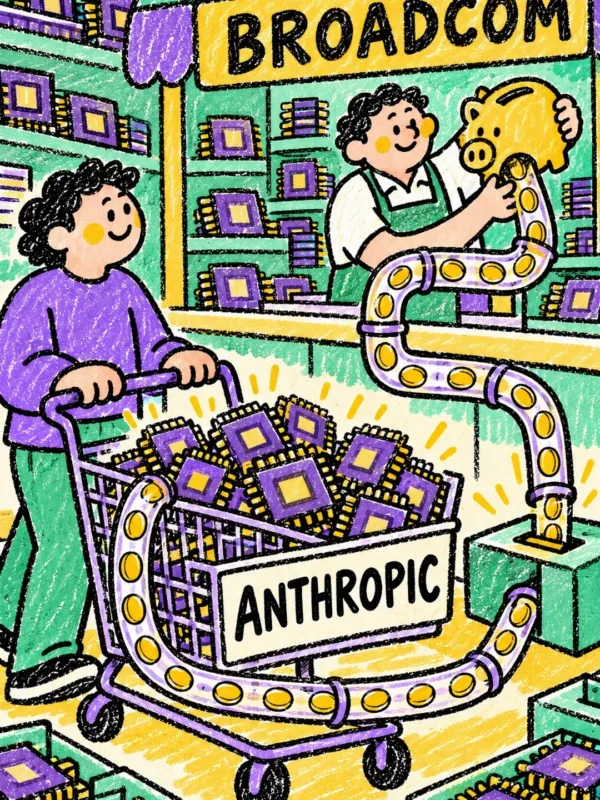
Korea is on track to collect KRW 63.2 trillion (about $46.8 billion) more in taxes this year than it expected in March. When it passed a supplementary budget (a mid-year revision of the budget) in March, the government forecast KRW 415.4 trillion; it has now raised that to KRW 478.6 trillion. The chip boom did much of the work.
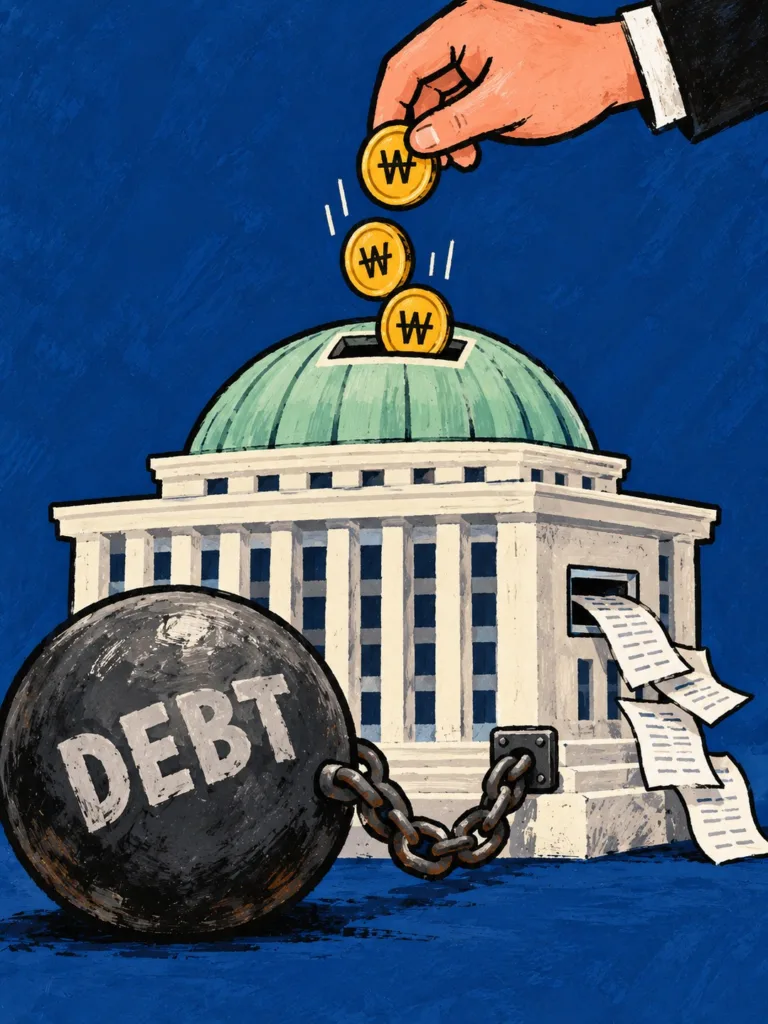
The common reaction is: then pay down the debt first. When a household with a loan gets a surprise bonus, paying off principal feels natural. Yet Korea's national debt is set to keep rising next year and all the way to 2030. The key is that the KRW 63 trillion is not money left over.
- Why isn't KRW 63 trillion more in taxes a surplus?
The KRW 63 trillion is not profit. It is simply more than was expected. On the original budget for this year, the managed fiscal balance (the government's real surplus or deficit, leaving out social security funds such as the national pension) is a deficit of KRW 107.8 trillion.
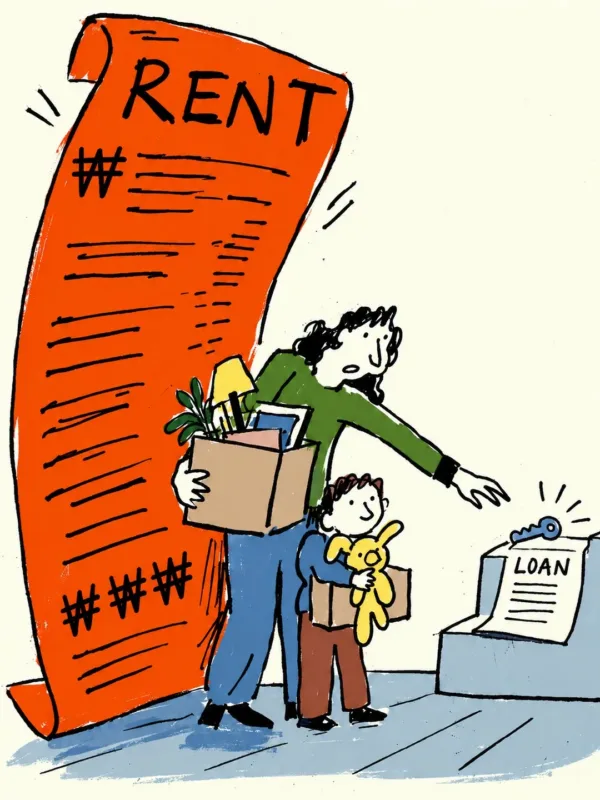
Shrink the national accounts by a factor of 100 million and it gets easy. A family with about $10,470 of debt planned to spend about $800 more than it earns this year, then got a bonus of about $470. Even if the whole bonus plugs the gap, it is still about $330 short (assumed calculation). What appeared is not money to repay debt, but money to borrow less.
- Isn't the government paying down any debt?
It is, a little. There are two ways to use extra taxes on debt: buy back government bonds (the IOUs a state writes when it borrows) already issued, or issue fewer new ones.
The Ministry of Economy and Finance (which handles taxes and government bonds) is using the windfall to cut October government bond issuance by KRW 5 trillion from plan and plans to buy back KRW 3.5 trillion of bonds already outstanding. On Sept. 22, citing market supply and demand, it also skipped part of its bond issuance (the subscription-type sale).
Think of it as drawing less on an overdraft line. But drawing less means the debt grows more slowly; the money already borrowed does not disappear.
- Even so, the debt keeps growing to 2030
In the government's 2026-2030 fiscal plan, national debt goes from KRW 1,413.8 trillion in 2026 to KRW 1,519.8 trillion in 2027 and KRW 1,734 trillion in 2030 (about $1.05 trillion to $1.28 trillion). That is a rise of about KRW 320 trillion in four years.
Yet as a share of GDP (the size of the economy), debt falls from 51.6% to 48.3% and then 49.0%. The math assumes the economy grows faster than the debt.
Put simply, it is like a raise that lowers your loan-to-income ratio while your loan balance actually grows. "Healthier public finances" and "less national debt" are not the same thing.
- As debt grows, who pays what?
More debt means more interest. Interest on national debt is projected to rise from KRW 36.5 trillion this year to KRW 42.8 trillion in 2027 and KRW 53.3 trillion in 2030 (about $27 billion to $39.5 billion). That is up about 46% in four years.
Divide the 2030 interest bill by a population of about 51 million and it comes to roughly KRW 1.04 million (about $770) per person (assumed calculation). Interest builds no roads or schools; it simply goes out the door, and in the end it is paid from taxes.
- The real danger: turning one-time money into money spent every year
Paying down debt first is not the only right answer. An investment that leaves behind more than the interest it saves can be worth spending on.
The problem is that there is no guarantee taxes swollen by a chip boom will come back every year. If that money funds spending that recurs every year, such as subsidies and payroll, then when taxes return to normal the spending stays, and the government must raise taxes, cut other spending or issue more bonds.
It is like getting a double paycheck one month and running up a pile of three-year installment plans. When your pay goes back to normal next month, the installments remain. In a 2008 paper, the OECD (a club of mostly advanced economies) found that countries that gave in to calls for tax cuts and more spending during past revenue booms permanently weakened their budgets once the windfalls proved temporary.
- Where will this KRW 63 trillion go?
The government plans to spend the windfall first on three core social policies (housing, jobs and loans for low-income households) and to use part of it to issue fewer bonds. A large share is meant to go into a new Future Response Fund (a state fund for investment and fiscal stability), but the fund can only be created once its founding law passes the National Assembly.
There is a safeguard. Article 90 of the National Finance Act requires at least 30% of the money left over after the year's books close (the fiscal surplus carryover) to go first into the Public Funds Redemption Fund, and at least 30% of what remains after that to repay debt such as government bonds.
- BITPRESS Insight
What matters more than the KRW 63 trillion figure is what kind of money it is. If boom money that may never return turns into spending that goes out every year, then once the boom ends the government issues more bonds, interest rises, and that interest is paid from the following years' taxes. Interest is already set to reach the KRW 53 trillion range by 2030.
The same goes for investors who watch government bond yields. Issuing fewer bonds puts fewer of them on the market, but that effect lasts only as long as the windfall does.
One test settles it: does money spent instead of repaying debt leave behind more than that debt and its interest? A one-time investment or money set aside in a fund leaves something behind; spending that goes out every year leaves only the debt.
Sources
https://www.mt.co.kr/economy/2026/10/01/2026093012513712519
https://www.newspim.com/news/view/20261001001382
https://www.newspim.com/news/view/20260922001145
https://www.newspim.com/news/view/20260901000075
https://www.newstomato.com/ReadNews.aspx?no=1312681
https://www.law.go.kr/lsLawLinkInfo.do?chrClsCd=010202&lsJoLnkSeq=900332257
https://ideas.repec.org/p/oec/ecoaaa/598-en.html
Glossary
Tax windfall — Taxes collected above what the government expected when it drew up the budget.
Managed fiscal balance — Government revenue minus spending, leaving out social security funds such as the national pension; it shows the state's real deficit or surplus.
Korea Treasury Bonds — Korea's main government bonds, issued to borrow money and repaid with interest at maturity.
Fiscal surplus carryover — Money left unspent after the government closes its books for the year.
Future Response Fund — A planned state fund to hold windfall taxes and other money for investment and fiscal stability; it needs a law passed by the National Assembly.
BITPRESS articles are information to help your investment decisions, not a recommendation to buy or sell any stock or coin. Investment decisions and their results are your own responsibility.