



The U.S. Federal Reserve (the central bank) raised its benchmark rate on Sept. 16 from 3.50-3.75% to 3.75-4.00%, its first hike since July 2023. Yet the forecast for September job growth, due Oct. 2, is 84,000, about half of August's 162,000.
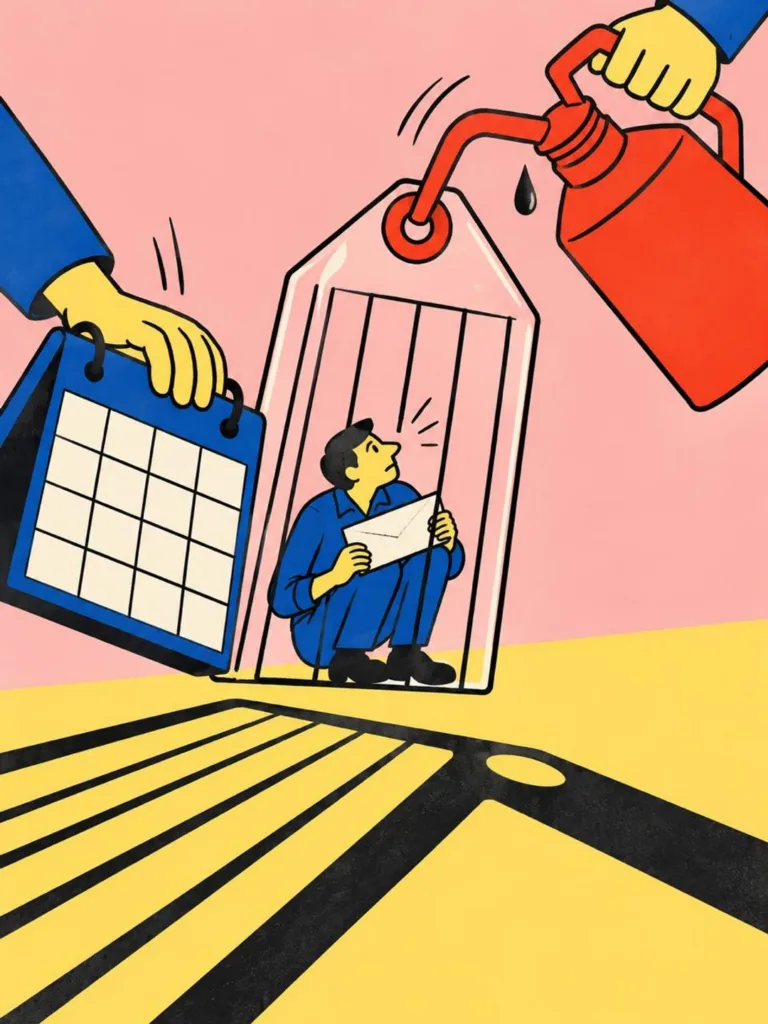
Rates are rising because of inflation, while job growth is expected to slow. That is why markets are talking about 'stagflation' again. But the Fed sees the economy as solid. The thing to watch is less whether a recession comes than whether oil-driven inflation meets a jobs slowdown.
- Why stagflation is scary
Stagflation is when a stalling economy (stagnation) and rising prices (inflation) arrive together. Usually prices fall when the economy is weak and rise when it is strong. When both hit at once, paychecks buy less, jobs feel shakier, and the central bank's remedies point in opposite directions.
Cut rates to save jobs, and prices may rise further. Raise rates to fight inflation, and the economy may cool further. Whichever it picks, one side gets worse.
- The Fed raised rates because of inflation
The Iran war rekindled inflation. It pushed up oil and gasoline prices, and U.S. diesel hit a record average of $6.31 a gallon on Sept. 16. U.S. consumer prices in August were 3.4% higher than a year earlier, and gasoline accounted for more than a third of the July-to-August increase.
The Fed raised its inflation forecast for this year from 3.6% to 3.7% and put core inflation, which excludes food and energy, at 3.4%. It does not expect inflation to return to its 2% target until after 2028. Officials also signaled one more hike is possible this year. But a rate hike cannot bring down gasoline prices right away. Selma Hepp, chief economist at the real estate data firm Cotality, said a hike is unlikely to lower gasoline prices or tariff costs and will only further dampen housing demand.
- A jobs slowdown is expected
U.S. employment unexpectedly fell in July. August rebounded with 162,000 new jobs, nearly three times the market forecast of 55,000. But the forecast for September, due Oct. 2, is back down to 84,000. The final estimate for second-quarter growth is also expected at 1.5%, below the previous reading of 2.1%.
Oil jumped again. After President Trump rejected Iran's seven-day plan to end the war, Brent crude, the global oil benchmark, climbed back above $100 a barrel on Sept. 28. Expectations of another rate hike next month rose with it.
- But the Fed sees a solid economy
In its statement, the Fed said economic activity is expanding at a solid pace and job gains have kept pace with the workforce. Unemployment is 4.1%. The Fed raised its growth forecast for this year from 2.2% to 2.3% and lowered its unemployment forecast from 4.3% to 4.1%.
Fed Chair Kevin Warsh said "inflation is the problem" and that the economy is essentially at full employment. In other words, the Fed wants to tame prices first while growth holds up. Having raised its growth outlook and kept its unemployment outlook low, the Fed's view is some distance from textbook stagflation. Treasury Secretary Scott Bessent has also argued that recent inflation is a temporary supply shock from oil and tariffs.
- In markets, stocks and bonds wobbled together
Oil-driven inflation worries shake an old investor rule of thumb. On Aug. 31, when oil jumped more than 3% and remarks by Chair Warsh raised expectations of a rate hike, the S&P 500 (an index of 500 leading U.S. companies) and the tech-heavy Nasdaq fell 0.4% intraday, and the 10-year Treasury yield rose to 4.76%. When Treasury yields rise, the price of bonds already held falls. When prices rise, Treasury yields jump first on expectations the Fed will hike. Stocks and bonds weakened on the same day.
In the week the Fed hiked, the 10-year Treasury yield topped 5%. When inflation is the problem, rates don't fall, so bonds do less to cushion stocks when they drop. On the other hand, one Korean brokerage said that, adjusted for inflation, real oil prices make an immediate recession unlikely.
- BITPRESS Insight
Right now the U.S. looks less like stagflation and more like 'only inflation running hot.' Unemployment is 4.1%, and the Fed actually raised its growth outlook. But if job growth keeps slowing while oil stays above $100, the Fed will find it hard to either cut or hike further.
Here is the difference that matters for investors. If a slowdown is the cause, rates fall and bonds soften stock losses. If inflation is the cause, rates rise and both can weaken together.
The rule of thumb fits in one line. Watch whether bonds rise or fall when stocks drop, and you can gauge whether the market fears recession or inflation.
Sources
https://www.federalreserve.gov/newsevents/pressreleases/monetary20260916a.htm
https://finance.yahoo.com/economy/policy/article/fed-raises-interest-rates-by-a-quarter-point-in-unanimous-decision-marking-first-hike-in-3-years-171212149.html
https://www.npr.org/2026/09/16/nx-s1-5968724/federal-reserve-interest-rates-inflation-economy
https://www.cnn.com/2026/09/16/economy/fed-rate-decision-september
https://www.coindesk.com/markets/2026/09/28/bitcoin-rally-takes-a-breather-ahead-of-key-u-s-employment-data-crypto-week-ahead
https://finance.yahoo.com/personal-finance/investing/article/bitcoin-and-ethereum-prices-today-monday-september-28-2026-bitcoin-loses-ground-after-trump-rejects-irans-7-day-plan-113444329.html
https://m.news.nate.com/view/20260831n33903
https://view.asiae.co.kr/article/2026091810431822542
Glossary
Stagflation — When the economy stalls (stagnation) while prices rise (inflation) at the same time.
Benchmark rate — The rate set by the central bank, which loan, deposit and bond rates follow.
Core inflation — Inflation measured without volatile food and energy prices, showing the underlying trend.
Treasury yield — The interest rate the government pays to borrow; when it rises, the price of bonds already issued falls.
Full employment — A state in which most people who want to work have jobs, keeping unemployment low.
BITPRESS articles are information to help your investment decisions, not a recommendation to buy or sell any stock or coin. Investment decisions and their results are your own responsibility.





