Strategy (the U.S.-listed company that holds the most bitcoin) spent $641.3 million buying back its own STRC preferred stock over the four weeks from Aug. 31 to Sept. 27. Over the same four weeks it spent $218.4 million buying bitcoin. That is about 2.9 times more on the preferred stock.
If all you see is "Saylor bought bitcoin again," this is easy to miss. The company's money is going first to its own preferred stock, not to bitcoin. That is because preferred-stock sales, which used to raise money for bitcoin, have stalled.
- For four weeks, preferred stock came before bitcoin
Line up the weekly filings with the U.S. Securities and Exchange Commission (SEC) and the order is clear. In the two weeks of Aug. 31-Sept. 7 and Sept. 8-13, Strategy did not buy a single bitcoin. Instead it bought back $176.3 million and $139.3 million of STRC.
On Sept. 14-20 it bought 950 bitcoin for $75.7 million but spent $174 million on STRC. On Sept. 21-27 it was 1,665 bitcoin for $142.7 million versus $151.7 million on STRC. In every one of the four weeks more money went to the preferred stock, even in the week it bought the most bitcoin.
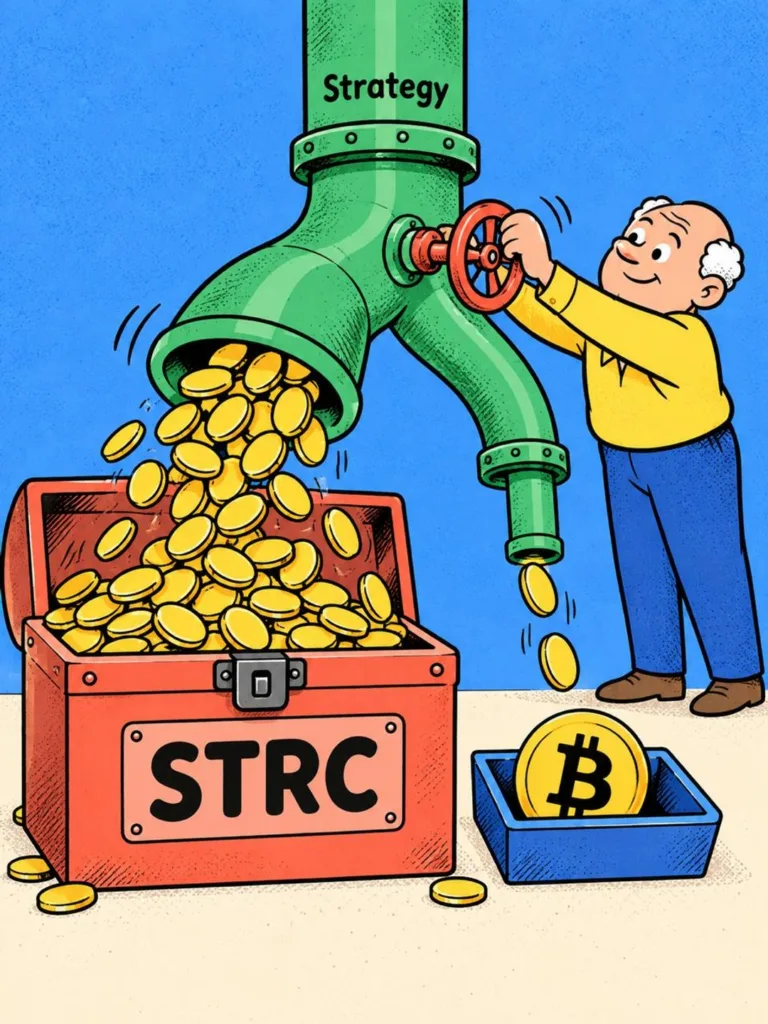
- STRC is the pipe that raises money for bitcoin
STRC is a variable-rate preferred stock that pays dividends and never matures. As of Sept. 25 its dividend rate is 12% a year, calculated on a base price of $100 per share. When the company sells new preferred shares to income-seeking investors, it can use the money to buy bitcoin, among other things.
But STRC has traded below $100 since May. It fell as low as $71 in June when bitcoin tumbled, and was still around $98.65 on Sept. 25. A rival preferred stock that pays a 13% dividend daily (Strive's SATA) is holding near $100. CoinDesk named this as the main reason STRC has lagged.
- Below $100, it isn't selling new shares
Selling new preferred shares below $100 means promising dividends on $100 while taking in less than that. Even at $98.65 a share, the company still owes $12 a year in dividends, based on $100. The cost relative to the cash raised rises above 12%.
In the Sept. 21-27 filing, new STRC sales were $0. The amount registered in advance for sale still has $17.5108 billion left.
In July, Strategy said it would buy back STRC, depending on market conditions, when it trades below $100. On Sept. 8 it doubled its preferred-stock buyback limit from $1 billion to $2 billion. As of Sept. 27, $723.5 million of that limit remains.
- Cash and common stock paid for buybacks and bitcoin
Apart from its reserve for dividends and interest, Strategy keeps a separate pool of cash for buying bitcoin and managing its capital. That cash fell from $1.44 billion on Sept. 7 to $1.0 billion on Sept. 27. In three weeks, $440 million went to preferred buybacks and bitcoin purchases.
Last week it also sold common stock. It sold 1,469,165 common shares (MSTR) for $246.2 million, using $142.7 million for bitcoin and $103.5 million for STRC. 42% of the money from new common shares went to buying back preferred stock.
- It paid more for bitcoin than the market price
Strategy's average purchase price on Sept. 21-27 was $85,681. On Sept. 28 bitcoin was about $83,401, 2.7% below that price. Last week the Fed (the U.S. central bank) raised its benchmark rate target to 4%.
For Strategy as a whole, there is still a cushion. Its 847,666 bitcoin were bought at an average of $75,437. The problem is not paper gains or losses but where to find new money to buy more bitcoin.
- BITPRESS Insight
Strategy has put a "daily dividend" proposal for its preferred stock to its Oct. 28 shareholder meeting and said the aim is to keep STRC trading close to $100. Only when the preferred stock gets back near $100 does selling new shares to raise bitcoin money get easier. The buybacks and daily dividends point the same way.
Meanwhile, bitcoin buying relies on cash and common-stock sales. Cash fell by $440 million in three weeks, and every new common share sold thins out each existing shareholder's stake.
The rule of thumb fits in one line. To gauge how much bitcoin Strategy will buy, look past Saylor's words to whether STRC has regained $100 and reopened preferred-stock sales.
Sources
https://www.sec.gov/Archives/edgar/data/1050446/000119312526403417/mstr-20260914.htm
https://www.sec.gov/Archives/edgar/data/1050446/000119312526396093/mstr-20260914.htm
https://www.sec.gov/Archives/edgar/data/1050446/000119312526389858/mstr-20260914.htm
https://www.sec.gov/Archives/edgar/data/1050446/000119312526384402/mstr-20260831.htm
https://www.kucoin.com/news/flash/strategy-buys-1-665-btc-at-85-681-average-price-repurchases-151-7m-strc
https://www.coindesk.com/markets/2026/09/25/strategy-proposes-daily-dividends-to-bring-strc-back-toward-usd100
https://www.coindesk.com/markets/2026/09/01/strategy-spends-usd635m-buying-back-strc-as-perpetual-preferred-stock-lags-usd100-par
https://www.coindesk.com/markets/2026/09/28/bitcoin-rally-takes-a-breather-ahead-of-key-u-s-employment-data-crypto-week-ahead
https://www.blockmedia.co.kr/archives/1144437
Glossary
Preferred shares — Stock with no voting rights that gets paid a set dividend before common shareholders do.
Variable-rate perpetual preferred stock — Preferred stock with no maturity date, so the principal is never scheduled to be repaid, and whose dividend rate the company can change.
Base price (stated amount) — The amount the dividend rate is calculated on; for STRC it is $100 per share.
Dilution — When a company sells more new shares, shrinking each existing shareholder's slice.
BITPRESS articles are information to help your investment decisions, not a recommendation to buy or sell any stock or coin. Investment decisions and their results are your own responsibility.