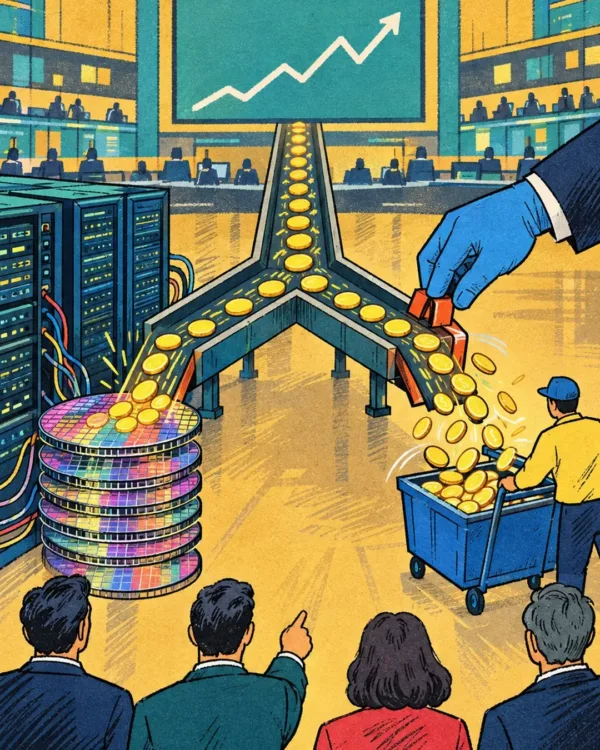

Heavy selling by foreign and institutional investors, centered on Samsung Electronics and SK hynix, has been making retail investors increasingly nervous. But an analysis drawing attention says this selling is not about deteriorating earnings; it is largely a ‘weighting adjustment’ driven by mechanical factors: ETF portfolio rebalancing and currency risk management.
‘Mechanical selling’ from rebalancing
Foreign selling is closely tied to the regular rebalancing of the MSCI Korea index (February, May, August and November). In particular, the MSCI Korea 25/50 index has a rule capping any single stock’s weight at 25%, so large caps such as Samsung Electronics and SK hynix are periodically subject to weight-cap adjustments . A Korea Exchange official explained, “The current net selling by foreign investors is in the nature of a mechanical weighting adjustment.”
The currency-defense logic
The bigger variable is the exchange rate. When foreign investors expect the won to weaken (and the dollar to strengthen), they cut positions preemptively to guard against currency losses. As recent geopolitical risk in the Middle East and rising oil prices made the exchange rate more unstable, a ‘sector-switching spree’ emerged, with investors selling chip stocks and moving into defense and energy stocks. This is not about falling company value; it is a move for currency risk management .
The fundamentals are still solid
If anything, earnings are strong. Samsung Electronics posted record quarterly revenue in its DS (semiconductor) division in the third quarter, and SK hynix continues to deliver strong results on robust demand for AI chips. Wall Street’s Goldman Sachs and JPMorgan have named Korean chip stocks as top picks, putting further upside for Samsung Electronics and SK hynix at 45–50%. Ironically, the U.S.-listed Korea ETF (EWY) has taken in about KRW 6.5 trillion in net inflows so far this year, meaning overseas retail investors are actively buying Korean chips. While foreign institutions trim their portfolio weights, global money is still watching Korean semiconductors.
A “don’t worry” signal
Since mid-April, foreigners have turned net buyers for the first time in three months, signaling a real return. Once the temporary selling from MSCI rebalancing is absorbed and exchange-rate instability eases, chip stocks are expected to attract money again. In the end, this selling is only a temporary phenomenon driven by structural factors that ‘force’ selling (ETF weight adjustments, currency risk), and nothing has changed in the medium- to long-term fundamentalsof the semiconductor supercycle. Rather than being swayed by short-term volatility, investors should keep the big picture in mind: real company value and rising demand for AI chips.
Extra: points worth knowing
💡 BITPRESS Insight
When you see foreign selling, it matters less ‘who sold’ than ‘why they sold’ — make a habit of checking. Selling for ETF rebalancing or currency hedging is passive selling driven by set rules and structures, not a withdrawal of confidence in the company. Selling triggered by an earnings shock or a shift in industry structure, on the other hand, is a completely different matter. Every time a foreign-selling headline appears, simply telling whether the reason is ‘rebalancing and currency’ or ‘a break in fundamentals’ can keep you from panic selling for no reason.