"The machines stopped, but people are alive"... what the arrival of KOSDAQ active ETFs means
Can active strategies ease the KOSDAQ 150 concentration created by passive ETFs' 'mechanical trading'?
Korea Exchange, where Korea's first KOSDAQ active ETF was listed on March 10, 2026 / Source: The Korea Economic Daily
1. "Why is my stock the only one not rising?"... KOSDAQ's strange landscape
In early 2026, the KOSDAQ index broke above 1,100, hitting its highest level in two years. But many individual investors were left puzzled: "The index is rising, so why is my stock standing still?"
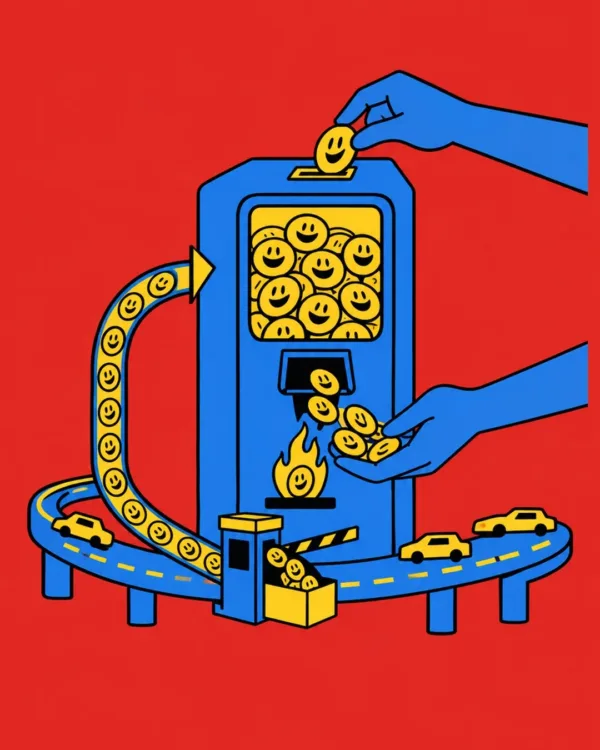
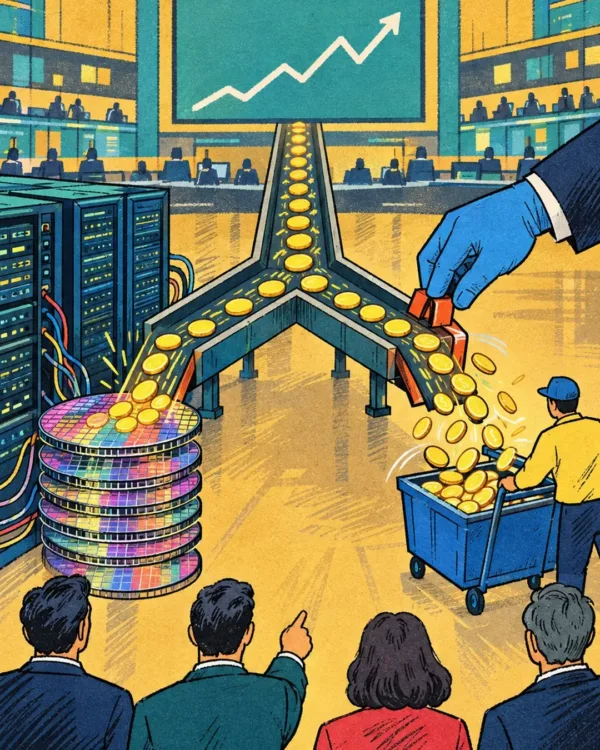
The answer lay in the explosive growth of KOSDAQ 150 ETFs. The market value of KOSDAQ 150 ETFs, KRW 4 trillion at the end of last year, quadrupled to KRW 17 trillion in just two months. The problem was that this money flowed 'mechanically' only into the 150 stocks in the KOSDAQ 150 index.
"As basket trading increased, with LPs (liquidity providers) buying KOSDAQ 150 stocks as a bundle during the ETF creation process, stocks outside the index suffered from a lack of liquidity," explained Kim Jin-young, an analyst at Kiwoom Securities.
This is the so-called 'ETF-driven supply-demand distortion.' The market was hot, but the heat was concentrated only on the 150 large caps, while the remaining 1,400 or so small and mid-cap stocks were left behind as 'neglected stocks.'
2. Active ETFs vs. passive ETFs: 'machine' vs. 'human'
To understand KOSDAQ active ETFs, you first need to know how they differ from passive ETFs.
Passive ETFstrack a specific index 'as is.' A KOSDAQ 150 ETF replicates the stock weights of the KOSDAQ 150 index exactly. The fund manager has no discretion. Fees are low (0.1-0.2% a year), but when the index falls, you lose money no matter what.
Active ETFsare different. A fund manager picks the stocks and adjusts their weightings directly. Using the roughly 1,500 stocks across the entire KOSDAQ as their investment universe, they aim for ‘excess returns over the KOSDAQ index (alpha).’ Fees are higher (0.5–0.8% a year), but when the market falls, a defensive strategy can reduce losses.
“Passive is run by machines; active is run by people.” So goes an industry saying. Since the Korea Exchange allowed equity active ETFs to list in July 2020, Korea's active ETF market has grown 50-fold, from KRW 2 trillion at the end of 2020 to KRW 98 trillion in February 2026.
3. Why now? The government's ‘Save the KOSDAQ’ project
There is a political backdrop to why KOSDAQ active ETFs are appearing at this moment.
After the KOSPI 6,000 era, the Lee Jae-myung government is now targeting a KOSDAQ index of 3,000and rolling out policies to revive the market.
In December 2025, it announced a ‘plan to strengthen trust and innovation in the KOSDAQ market’ and set out to improve the market's health by tightening the delisting of insolvent companies.
The government is encouraging funds worth KRW 1,400 trillion to put spare cash into the KOSDAQ, and decided to blend a 5% KOSDAQ index weighting into the benchmark used to evaluate fund management.
As a presidential candidate, President Lee Jae-myung personally invested KRW 20 million in a KOSDAQ 150 ETF, showing his interest in the market.
“The intent is to ease the concentration of money in KOSDAQ 150 ETFs and to let flows reach quality small and mid-sized companies as well.” That is the analysis of an official at Eugene Investment & Securities.
4. Samsung vs. Timefolio vs. Hanwha: analyzing a three-way race
The KOSDAQ active ETFs from Samsung Active and Timefolio, listed on the same day on March 10, differ right down to their strategies.Table
| Asset manager | Product | Total fee | Core strategy | Initial holdings |
|---|---|---|---|---|
| Samsung Active | KoAct KOSDAQ Active | 0.5% | Aggressive strategy focused on growth industries. Core-satellite structure weighted 70% growth stocks and 30% value stocks. Aims for 50% or less overlap with the KOSDAQ 150. | ABL Bio, LigaChem Biosciences, EcoPro BM, OliX, Vinatech, etc. |
| Timefolio | TIME KOSDAQ Active | 0.8% | ‘Core-satellite’ strategy. Builds a stable base in large sectors such as secondary batteries and bio, then finds stocks with growth potential as themes rotate. Concentrated portfolio of 30–40 stocks. | OliX, Samchundang Pharm, Rainbow Robotics, FADU, Alteogen, etc. |
| Hanwha Asset Management | PLUS KOSDAQ 150 Active | 0.15% | Uses the KOSDAQ 150 index as its benchmark. Picks stocks from within a proven group of companies. Excludes financially weak companies through negative screening. | Semiconductors 30%, bio 29%, beauty 12%, AI 10%, etc. |
Samsung pursues ‘aggressive growth,’ Timefolio ‘growth with stability’ and Hanwha ‘stable value.’ The key point is that Samsung and Timefolio cover the ‘entire’ KOSDAQ, so they can also invest in small and mid-caps outside the KOSDAQ 150.
5. Market impact: a revival of ‘hidden stocks’?
The biggest impact KOSDAQ active ETFs will have on the market is more diverse fund flows.
Right now, KOSDAQ 150 ETFs concentrate money in 150 stocks chosen mainly by market cap and liquidity. Active ETFs, however, are run by fund managers who pick stocks directly, so money could also flow into small and mid-caps with solid earnings that have been overlooked for lack of liquidity.
“For small and mid-caps that were not in the KOSDAQ 150, it effectively creates a channel through which ETF flows can have a bigger impact.” Researcher Kim Jin-young called it “an opportunity for the benefits of government policy, which had been concentrated in the top 150 stocks, to spread across the whole market.”
In fact, individual investors have made net purchases of about KRW 5.9 trillion in KOSDAQ ETFs this year, and much of that money could shift into active ETFs.
With foreign and institutional investors having already begun a ‘money move’ from the KOSPI to the KOSDAQ (net KOSDAQ purchases of KRW 2.2935 trillion from late February to early March), active ETFs are expected to become a new channel for inflows.
6. Challenges and outlook: the ‘art of management’ put to the test
The success of KOSDAQ active ETFs depends on ‘the skill of their managers.’ The KOSDAQ is a market with big swings between stocks and fast-rotating themes, so stock-picking ability translates directly into returns.
“Unlike passive ETFs, active ETFs compete on management performance and product innovation.” A Korea Capital Market Institute report projected that “if the largest asset managers launch products in earnest and start competing to cut costs, the market could revert to the same kind of competition seen in the passive ETF market.”
In January 2026, financial authorities began easing regulations by pushing to introduce ‘active ETFs without index requirements.’ Currently, funds must maintain a correlation coefficient of at least 0.7 with a benchmark index, but managers are expected to gain the freedom to pursue their own strategies.
7. Conclusion: from ‘the age of machines’ to ‘the age of people’
The arrival of KOSDAQ active ETFs goes beyond a simple product launch; it signals a paradigm shift in Korea's capital markets.
Until now, the ETF market has lived in ‘the age of passive.’ Low fees, transparent management and tracking the market's average return were the virtues. But as the concentration in the KOSDAQ 150 shows, ‘mechanical trading’ has also distorted the market.
Active ETFs bring ‘human judgment’ back into the market. Fund managers' research and strategy matter again, and an ecosystem that highlights the value of individual companies could take shape. As Kim Ji-woon, a division head at Samsung Active, pledged: “We will discover hidden quality companies not included in the KOSDAQ 150, introduce undervalued stocks and help revitalize the KOSDAQ market as a whole.”
Of course, there are risks. Active ETFs charge higher fees, and a manager's mistakes turn directly into losses. But in the sense that ‘people move where the machines stop,’ KOSDAQ active ETFs are both a new experiment and an opportunity for the Korean stock market.
🔍 BITPRESS Insight
“The paradox created by the success of passive ETFs”
The arrival of KOSDAQ active ETFs shows a paradox: ‘the success of passive ETFs created the problems of passive ETFs.’ KOSDAQ 150 ETFs were so successful that they ended up distorting the market, and active ETFs became necessary to fix it. This means Korea's ETF market has entered a mature stage.
“From policy ETFs to market ETFs”
Existing KOSDAQ 150 ETFs grew on the back of government policy (the revised fund management evaluation benchmark). Active ETFs, by contrast, will succeed or fail on managers' stock-picking skills and the market's own choices. The shift from ‘policy-driven’ to ‘market-driven’ is an important turning point for Korea's capital markets.
“The opening shot of a fee war”
With Hanwha Asset Management entering the race with a strikingly low fee of 0.15%, fee-cutting competition looks inevitable in the active ETF market too. But since the essence of active management is ‘generating alpha,’ competition on performance, rather than simple price competition, will dominate the market.
“More choices for individual investors”
Until now, individuals had no way to invest in the entire KOSDAQ other than KOSDAQ 150 ETFs. Active ETFs give individual investors who had focused only on ‘KOSDAQ blue chips’ a chance to find the ‘hidden gems of the KOSDAQ.’ This will help individuals diversify their asset allocation and build a healthy ecosystem for the KOSDAQ market.