From FOMO through FOPO to, now, ‘the art of waiting’
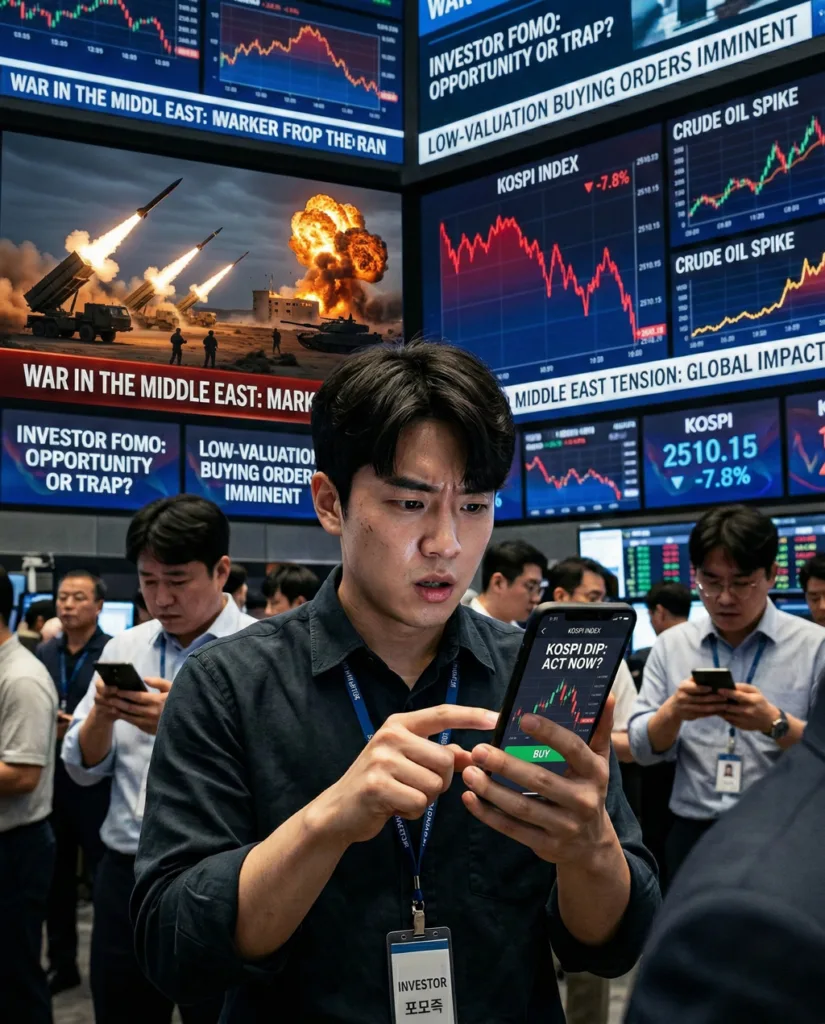
As the KOSPI breaks above 6,000 in a ‘historic bull run,’ one interesting phenomenon has emerged. Investors who never got into the Korean stock market and have only watched from outside — the so-called ‘people outside the Korean market’ — see the latest U.S.-Israeli strikes on Iran as ‘the opportunity they have been waiting for.’
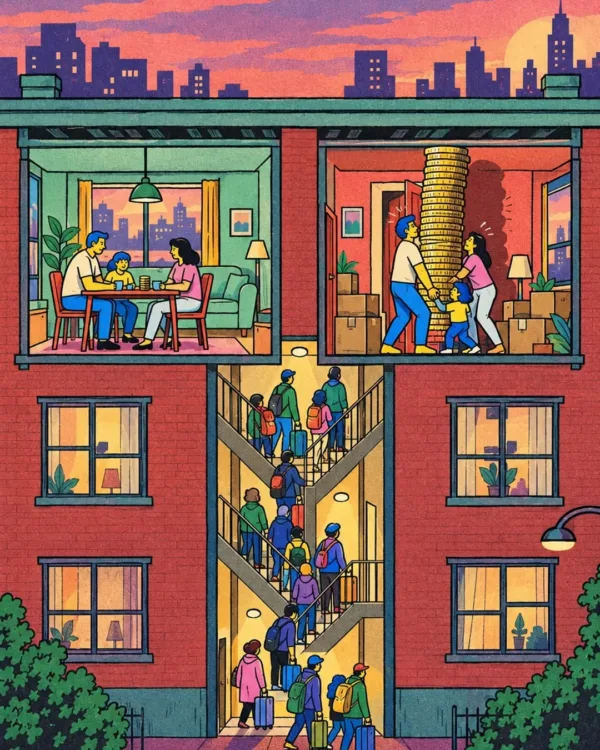
Standby money for the stock market has already topped KRW 120 trillion. These investors are not simply sitting on the sidelines. They are ‘lurking buyers’ ready to jump in the moment a correction comes. Unlike in the past, the geopolitical bad news of war is actually stirring their appetite for ‘buying the dip.’
1. “It rose too much for me to buy”… the paradox of FOMO in Korean stocks
The Korean stock market recently showed a textbook case of ‘FOMO (Fear of Missing Out).’ Investors gripped by the fear of being left behind in a rising market poured in day after day. At the same time, however, another psychology was at work. ‘FOPO (Fear of Peak Out)’— the fear that getting in now means getting stuck at the top.
As a Korea Economic Daily column pointed out, the current market is a strange one where FOMO and FOPO cross, where “the shoeshine man and Mr. A coexist”
.
In fact, as the KOSPI climbed past 4,000 toward 6,000, many investors hesitated to get in, saying “it has gone up too much.” While acknowledging the tailwind of the semiconductor supercycle, they stayed put, thinking “it's too late now.” As a result, even as the ‘money move’ from bank deposits into stocks accelerated, many still stayed on the ‘sidelines.’
2. The Iran war: a signal that ‘the wait is over’?
But once the U.S. and Israel struck Iran, the picture changed. The prevailing view is that the impact of heightened Middle East tensions on Korean stocks will be “limited”— that is the dominant analysis
, but investor sentiment is painting a different picture.
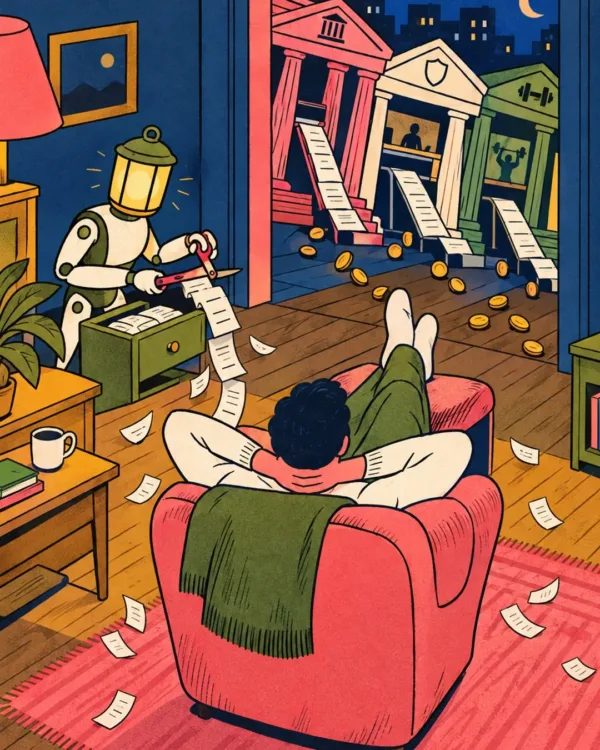
“Finally, a correction is coming”
NH Investment & Securities put its expected KOSPI band at 5,800–6,000 points, advising that “if stocks fall, it could be a buying opportunity”
. This is not just an institution's analysis; it reflects the collective unconsciousof individual investors sitting on KRW 120 trillion in standby money.
What is especially unusual this time is the ‘time buffer’ effect. Analysts note that while the Korean market was closed for the substitute holiday for March 1 Independence Movement Day, the shock in global markets had time to be priced in and settle down
. This creates a psychological illusion, as if “the war handed a gift to Korean investors alone.”
3. KRW 120 trillion in ‘ammunition’… is it different this time?
Compared with the past, today's standby money looks clearly different. Even during ‘Black Wednesday’ in November 2025, investor deposits hit a record high of KRW 88 trillion
. Now, however, they have topped KRW 119 trillionand are on the verge of breaking KRW 120 trillion
.
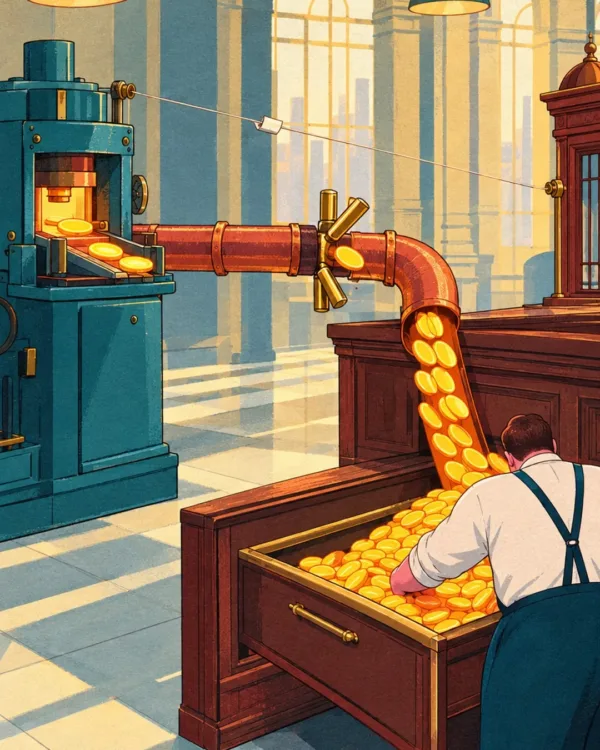
More important is the return of ‘debt-financed investing’ (margin loans). Margin loan balances hit a record high for the first time in four years, showing that investors are not just waiting for a correction but are in the aggressive mood of “if a correction comes, I'll buy even with borrowed money”.
.
This means it has gone beyond simple bargain hunting and evolved into an ‘accumulation on dips’ strategy. When war or bad news hits, the expectation that “it will bounce back this time, too” kicks in. In fact, during the first through fourth Arab-Israeli wars, the S&P 500 fell 1.0% right after the fighting began but then posted gains of 3.1% a week later and 2.5% a month later, following a pattern of recovering its losses
.
4. A ‘defense premium’ for chips… the start of a new narrative?
Interestingly, some analysts say this strike on Iran could trigger a ‘geopolitical revaluation’ of Korean semiconductors.
YouTuber Kim Hee-wook, known as ‘London Gorani,’ pointed out that AI data-analysis platforms served as key weapons controlling the battlefield in this operation, arguing that “an era has come in which memory chips matter more than bullets”
. The argument is that Samsung Electronics and SK hynix, which make high-bandwidth memory (HBM), could go beyond being mere chipmakers and earn a ‘defense premium’.
This narrative raises hopes of a stronger rebound after a short-term correction. The logic that “war increases demand for AI chips” gives dip buyers a ‘fundamental shield’.
5. The dilemma of human psychology: “Won't it be different this time?”
But history repeats itself. During the dot-com bubble of the 1990s, the moment “the shoeshine man” talked of nothing but stocks was exactly the peak. Today's KRW 120 trillion in standby money could also be a sign of overheating.
The fact that the ‘KOSPI 200 Volatility Index (VKOSPI)’hit 54, above the ‘extreme fear’ threshold of 50, deserves attention
. It shows investor anxiety growing even as the KOSPI rises. In other words, a contradictory mindset — “anxious when it rises, an opportunity when it falls”— is coexisting.
This mindset tends to narrow the ‘trading band.’ Buying flows in as soon as a correction comes, and profit-taking appears whenever prices rise, which could create a ‘range-bound bull’ market.
6. Outlook: “War is a short-term shock; standby money is long-term support”
Brokerages see the impact of the Iran situation as “wider short-term volatility, long-term direction intact”. Mirae Asset Securities analyst Kim Seok-hwan said that “record-level exports driven by strong chip sales and ‘powerful retail’ buying are supporting the market”.
The key is ‘whether it drags on’. Analysts suggest that behind President Trump's surprise weekend military action was a calculation to minimize the fallout on global financial markets
. Given the midterm elections and inflation pressure, a prolonged war would be a burden.
If the situation stabilizes early, the KRW 120 trillion in standby money will become a driver not of a ‘delayed shock’but of a ‘delayed rally’. But if a worst-case scenario such as a blockade of the Strait of Hormuz materializes, even KRW 120 trillion of buying power could falter for a while.
BITPRESS Insight
“The end of waiting, or the start of another wait?”
For investors left out of the Korean market, FOMO has now turned into ‘the FOMO of waiting’. The anxiety that “if I miss this correction, I'll never get in” has led them to reinterpret the bad news of war as ‘good news.’
But whether their dip buying will support the market, or whether they will fall into the ‘trap of buying in installments’and face a steeper decline, remains to be seen. One thing is certain: a huge pool of ‘latent buying power’ — KRW 120 trillion in standby money — exists. That could become the market's self-fulfilling prophecy that “the correction won't be deep”.
Warren Buffett's lesson to “be greedy when others are fearful” still seems valid. This time, though, it is worth watching whether a new pattern has emerged: “be greedy while others wait, and wait while others are greedy” .
[Key checkpoints]