- Two kinds of money in a company’s pocket: retained earnings and paid-in capital
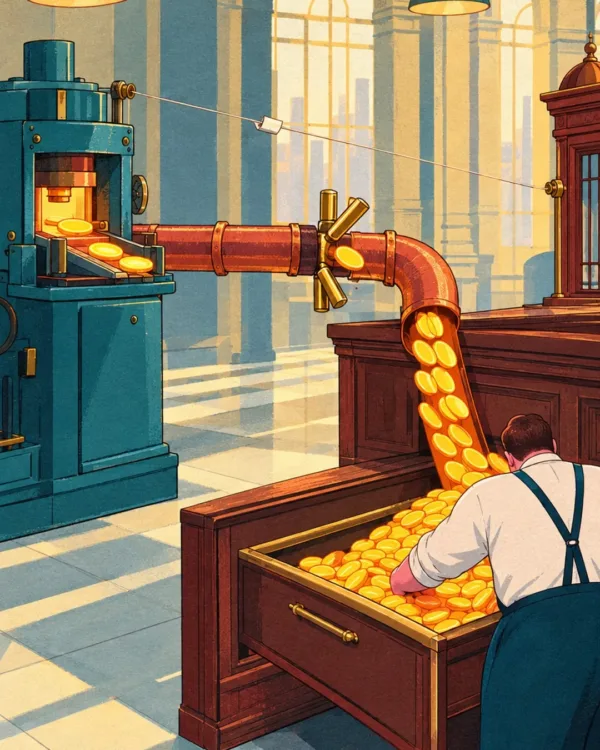
To understand this article, you first need to know the two kinds of money on a company’s books. Paid-in capital is the seed money shareholders pooled when the company was founded, like the company’s roots. Retained earnings, on the other hand, are like bonus money the company earned by doing very good business and stacked up in its vault. The key difference is that paid-in capital is legally locked up so it cannot be taken out freely, while retained earnings can be used relatively freely, such as for dividends or the business.
- A stock split is swapping one 10,000-won bill for ten 1,000-won bills
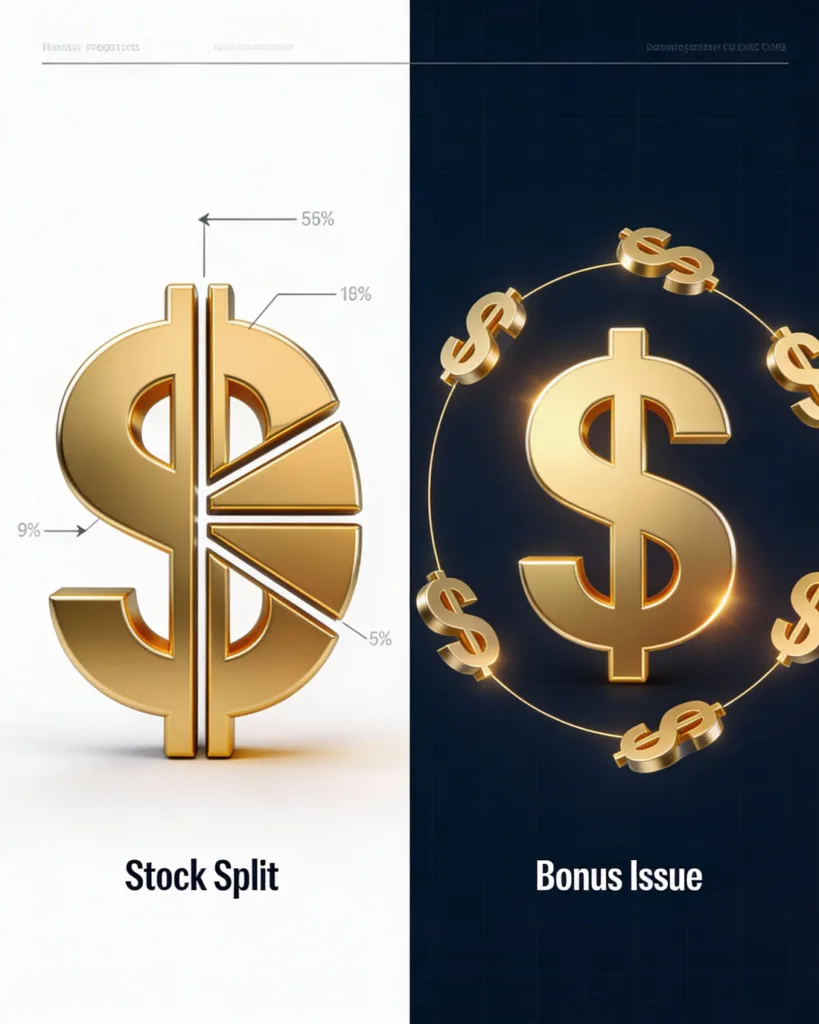
A stock split is very simple. It is a question of whether to cut a pizza into 4 slices or 8. Not a single won in the company’s vault moves. Since it merely divides the unit of shares, the number of shares goes up and the price per share falls accordingly. For example, if one share worth KRW 1 million is split into 10, you end up with 10 shares worth KRW 100,000 each. Nothing has changed in your wallet’s total or the company’s vault — it is simple division.
- A bonus issue is a decision to transplant spare cash in the vault into the roots
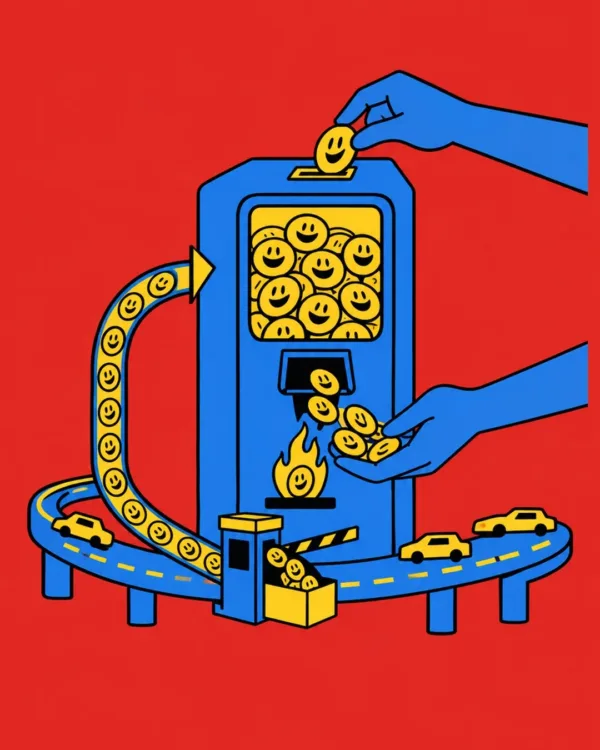
A bonus issue is an accounting event on a different level from a stock split. It is the process of taking retained earnings, freely usable money stacked in the vault, and transplanting it into paid-in capital, the roots that cannot be freely taken out. The company prints new shares equal to the amount moved and hands them out to shareholders for free. From a shareholder’s point of view, the price per share is marked down by the ex-rights adjustment in proportion to the added shares, so the total in your account stays the same for now, just as with a stock split. But inside the company, a major change has taken place: money that could be used freely is now locked permanently into base capital that cannot be taken out.
- Why is a bonus issue seen as strong good news in the market
Logically, the numbers in your account stay the same, so why do people get so excited about bonus issues? The first reason is the company’s financial confidence. Money moved into paid-in capital cannot be taken out again without going through a capital reduction, a very complicated and difficult process. Locking up valuable retained earnings that could have been paid as dividends into paid-in capital is like burning the bridges behind you, declaring that the company will earn more than enough even with this money tied up. In short, it is a kind of certification mark that only quality companies with ample retained earnings can earn.
The second reason is that it primes the pump for the share price. When a bonus issue lowers the price per share, investors feel the stock has become cheaper, and trading picks up. With trust already in place that the company is strong enough to grow its paid-in capital with its own money, a surge in trading volume often lets the marked-down price recover quickly or climb higher than before. At that point, shareholders finally pocket real free gains as the larger number of shares is multiplied by the recovered price.
BITPRESS Insight
If a stock split is a marketing strategy of repackaging a product into smaller units for customers’ convenience, a bonus issue is a real showdown in which the company stakes its future growth potential. Being able to lock its own money behind the hard iron bars of paid-in capital is proof of that much confidence in its earnings. Rather than simply celebrating more shares, investors should watch how much more profit the company can generate from the money it moved into paid-in capital. In the end, the true value of a bonus issue comes from the company’s underlying earning power that pushes the share price back up after the ex-rights adjustment.