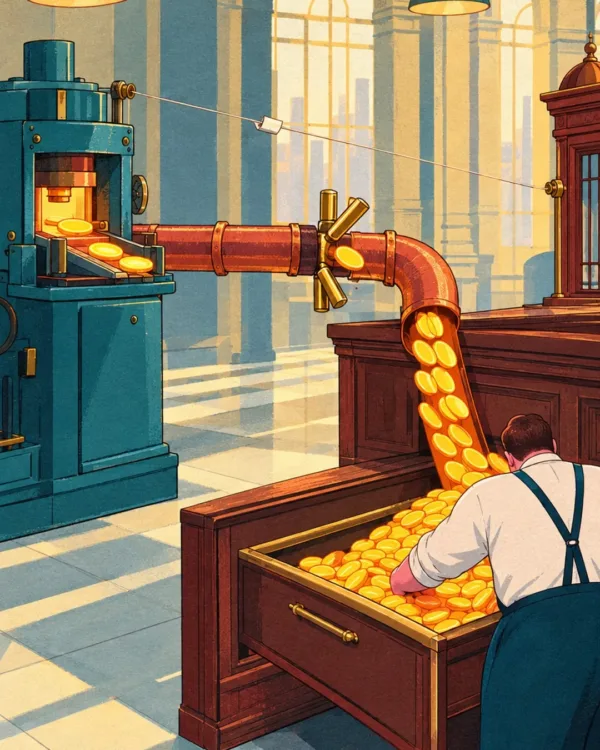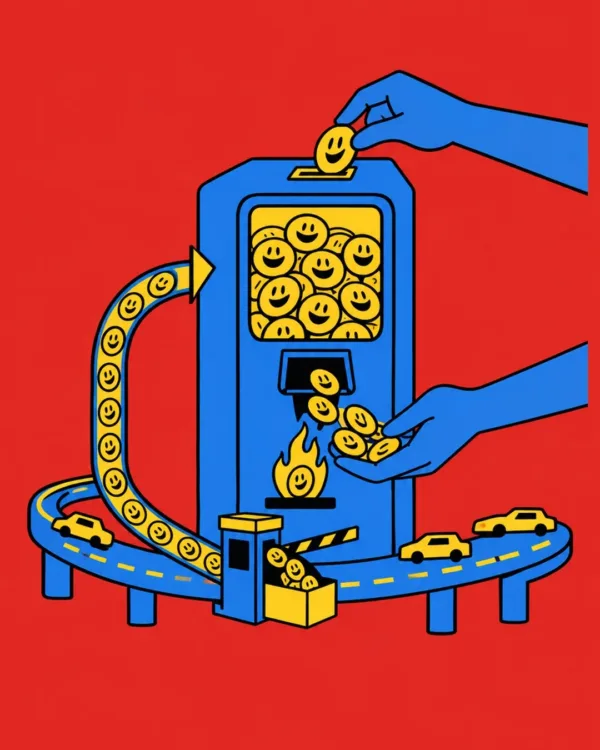

Demand deposits at Korean banks have fallen by more than KRW 30 trillion this year. At the five major commercial banks, balances dropped to the KRW 643 trillion range as of the 15th, and this is not simply because of rate cuts. Amid KOSPI’s record highs and the Bitcoin ETF craze, a “money move” is accelerating as investors leave banks and shift funds to brokerage CMAs and crypto exchanges.
Banks vs. exchanges vs. brokerages: a clash of powers
Traditional banks are in trouble as the appeal of deposit interest fades. With time deposit rates falling, outflows of more than KRW 10 trillion a day keep recurring, and banks are holding on by issuing bank bonds, but their stable funding is shaking. Brokerage IMAs (integrated investment accounts), on the other hand, are hot on KOSPI’s gains (KRW 1 trillion in net inflows this year). Even the National Pension Service is discussing raising its allocation to Korean stocks.
Crypto exchanges are the dark horse in this game. The 16 million users (32% of the population) of Korean exchanges such as Upbit and Bithumb are shifting to long-term investing centered on Bitcoin (60% of holdings). Despite $110 billion flowing abroad, the lifting of the ban on corporate investment and hopes for easier stablecoin rules are turning exchanges into “rising powers.”
The real insight from this “exodus”
For Bitcoin and stock investors, this is the opening shot of a “liquidity war.” Bank deposits have become “dead money” that cannot even beat inflation, while KOSPI and Bitcoin promise returns of 20–50% a year. For example, moving a KRW 100 million deposit into crypto would earn KRW 30 million on a short-term 30% rise, but you must also accept the risk of a 20% drop.
Looking deeper, it is a trend away from centralization. Stablecoins are threatening bank deposits, and overseas coins like Tether are emerging as top holders of U.S. Treasuries. The Bank of Korea’s halted CBDC pilot (100,000 participants), followed by a turn toward private stablecoins, proves the point. From an investor’s view: banks are a “protective wall,” but crypto and stocks are a “growth engine.”
The future of banks: adapt or fall behind
Banks are already fighting back. Shinhan, KB and Woori Bank have formed crypto task forces and are taking stakes in Web3 companies (such as GOPAX). If the Financial Services Commission’s “Digital Asset Basic Act” allows bank-led stablecoin consortiums (50%+1), won-denominated stablecoins could stem the deposit exodus. With Big Tech alliances also joining in — Mirae Asset (pursuing an acquisition of Korbit), Naver and others — banks are expected to transform into “hybrid financial hubs.” If they fail, another KRW 100 trillion in deposits could leave.
Crypto exchanges: the “Amazon” of finance?
Upbit (80% market share) would leap into a hub for stablecoins and tokenized assets if regulations ease. The inflow of institutional money as corporate investment is allowed in 2026, along with Bitcoin mining stocks (BitMine as the No. 2 buyer), backs this up. For investors: exchanges are a gateway to 24-hour high leverage and DeFi, but beware the risk of the kimchi premium collapsing. In the long run, they will partner with banks to play the role of a “digital Wall Street.”
BITPRESS Insight
If banks today have served as “money storage,” crypto exchanges will evolve into “global asset hubs” from 2026 onward. If you hold Bitcoin, watch for Upbit and Bithumb to launch won stablecoins once the Digital Asset Basic Act passes – a structure that shares 15% returns from tokenized assets instead of 3% bank deposit interest, marking a first step away from centralization and direct access to liquidity pools for retail investors.