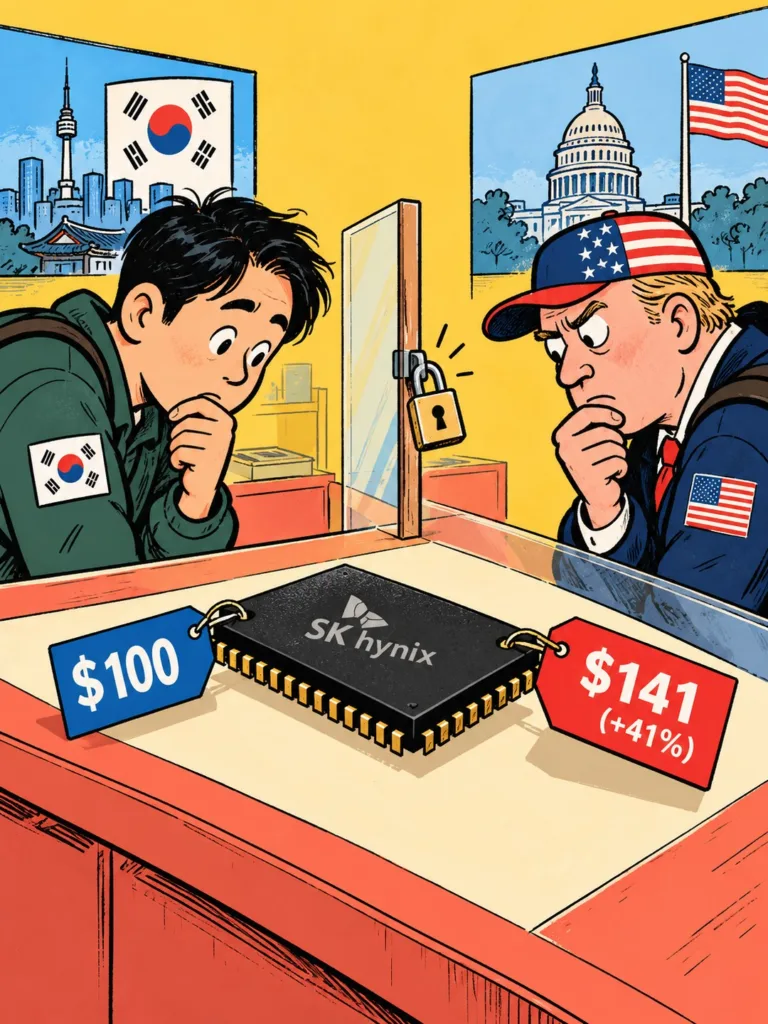
On Sept. 30, one SK hynix share closed at KRW 1,776,000 (Korean won; about $1,308.80) in Seoul. The same day on Nasdaq, 10 of the company's American depositary receipts (ADRs, certificates that let US investors trade a foreign company's shares) cost $1,841.50. Converted at that day's exchange rate, that is about KRW 2.5 million, or 40.7% more than in Seoul.
The common explanation is that the stock is simply popular in the US. But popularity alone rarely keeps a gap like this open for long. Usually someone buys the cheap side, converts it and sells it on the expensive side, and the gap closes quickly. For SK hynix, that conversion path is very narrow.
Americans aren't the only ones paying this premium. Korean investors bought a net $713.85 million (about KRW 960 billion) of the ADRs in New York from the listing through Sept. 11. Reasons cited include the US market's relative stability, hopes that the premium will last, and an ADR price about one-tenth of a Seoul share, which makes it easier to buy.
- What exactly is the 41% comparing?
Ten ADRs carry the same rights as one Seoul share. So you multiply the New York price by 10 and set it against the Seoul price. Comparing Sept. 30 closing prices, New York was 40.7% more expensive; the 41% in the headline is that figure rounded.
But the two markets close at different times. New York opens after Seoul has closed, so the 41% also includes price moves in between. Seen the other way, investors in Seoul hold the same company about 29% cheaper than American investors (BITPRESS calculation).
- For other stocks, the gap is mostly within 5%
When a foreign company's shares also trade in the US, the two prices usually move together. In one tracker comparing 32 US-traded foreign stocks with their home listings, 28 were within 5% on Oct. 1. SK hynix had the widest gap on that list.
They move together because of arbitrage (buying something where it is cheap and selling it where the same thing is expensive). When the US certificates get pricey, brokers buy home-market shares and convert them into new certificates to sell. As more certificates appear, the premium shrinks.
- For SK hynix, the path is wide in only one direction
On July 9, SK hynix sold 177.9 million ADRs at $149 each, raising $26.5 billion. It was the largest ADR offering on record, and the shares began trading on Nasdaq as SKHY the next day. That amount is about 2.5% of all the company's shares.
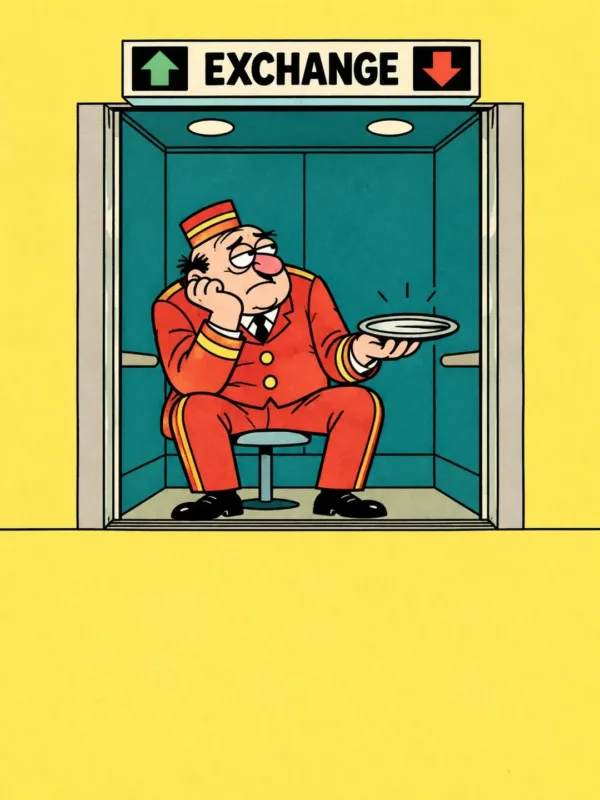
On July 29, the company said, "ADRs can be freely converted into ordinary shares, but converting ordinary shares into ADRs may be limited by conversion procedures and ADR conversion limits." According to Korean press reports, turning Seoul shares into ADRs requires the company to file with regulators, which usually takes several weeks, and going beyond 2.5% would require procedures equivalent to an additional listing.
Think of a limited-edition sneaker. Because no more pairs can be made, resale prices run above retail. The difference is that SK hynix's "retail store," the Seoul market, is always open. The problem is getting to that store.
- Why don't Americans just buy in Seoul?
Korea has lowered the barriers quite a bit. In December 2023 it scrapped a 30-year-old foreign investor registration requirement, and foreign individuals can now open an account with a passport number. On March 4, 2025, Nextrade, Korea's first alternative trading venue (a second market for trading stocks besides the Korea Exchange), opened and stretched the trading day to 12 hours.
Still, an American retail investor who wants Seoul shares directly needs a broker that can place orders on the Korea Exchange, has to convert dollars into won, and must trade in sessions that fall in the middle of the night in New York. SKHY takes just a ticker symbol.
MSCI (the company whose stock indexes global funds track) pointed to similar access barriers. In June it again left Korea off its watch list for an upgrade to developed-market status, citing the difficulty of exchanging won offshore and slow uptake of omnibus accounts.
- What do buyers who paid the premium take on?
The premium is not fixed. After narrowing to 15.3% on July 27, it widened to 60.1% on July 30, when Seoul shares fell after the earnings release. As a daily average, it was 32.5% in July, 35.4% in August and 38.7% in September through mid-month (when the report was written).
Put simply, someone buying the ADR buys the company's stock plus a second product: the premium.
Say the Seoul price and the exchange rate stay the same, but the premium shrinks from 41% to 15%, the lowest it had been up to that point. The ADR would then fall about 18% (BITPRESS hypothetical calculation). On KRW 10 million (about $7,370 at about KRW 1,357 per $1, the rate implied by Sept. 30 prices), that is a loss of about KRW 1.8 million even if nothing happens to the company. On top of that, ADRs can carry higher taxes than Korean shares for Korean investors in some cases.
- Where this happened before: Taiwan's TSMC
Taiwan's TSMC (the world's largest contract chipmaker) is the earlier case. When it listed in 1997, ADRs made up 2.9% of its shares; as of a July report, they made up 20.5%. That share did not grow on its own. From 2001 to 2007, early investors converted shares into ADRs several times, and each time it took approval from TSMC's board and Taiwan's Financial Supervisory Commission plus registration with the US Securities and Exchange Commission.
SK hynix is not at that stage. On July 29 the company said "nothing concrete has been decided" about raising the ADR share. On Sept. 14, a securities industry official said the gap "will be hard to narrow for the time being," but added that "once the market stabilizes, the gap is expected to narrow in a few months." Both are forecasts, and there is no set timeline.
- BITPRESS Insight
Same company, same earnings, same management, yet a 41% price gap. That gap appears to come mainly from the narrow path between Seoul and New York rather than from how good the company is.
The Korea discount (Korean stocks trading cheaper than similar foreign companies) is often blamed on corporate governance. Governance still matters, but for this stock, how easy it is to buy and sell also moves the price a lot. As of Sept. 30, SK hynix was worth about $954 billion at Seoul prices, and about $1.34 trillion if the New York price is applied to the whole company.
The rule is simple. When the same company trades at two prices in two places, look at the path between them before the company. If you paid a premium while that path is narrow, the premium will rise and fall separately from the company's earnings.
Sources
https://asiatimes.com/2026/10/why-americans-pay-41-more-for-sk-hynix-shares-than-koreans
https://www.fnnews.com/news/202609141827018830
https://www.sedaily.com/article/20069178
https://www.g-enews.com/article/Industry/2026/07/2026072910481799943084322ec9_1
Glossary
American depositary receipt (ADR) — A certificate traded on a US exchange that stands for a foreign company's shares held by a bank.
Premium (price gap) — How much more, in percent, a company's overseas certificate costs than its home-market share.
Arbitrage — Buying something where it is cheap and selling it where the same thing is expensive to pocket the difference.
Net buying — The amount bought minus the amount sold over a period; a positive number means more money went into buying.
Omnibus account — An account in which an overseas broker pools many clients' orders, making it easier for foreigners to buy Korean stocks.
KRW (Korean won) — Korea's currency. In this article, about KRW 1,357 bought $1 on Sept. 30, 2026, based on SK hynix's Seoul closing price in won and in dollars.
Korea discount — The long-running pattern of Korean stocks trading at lower prices relative to earnings than similar companies elsewhere, often blamed on governance and market access.
BITPRESS articles are information to help your investment decisions, not a recommendation to buy or sell any stock or coin. Investment decisions and their results are your own responsibility.