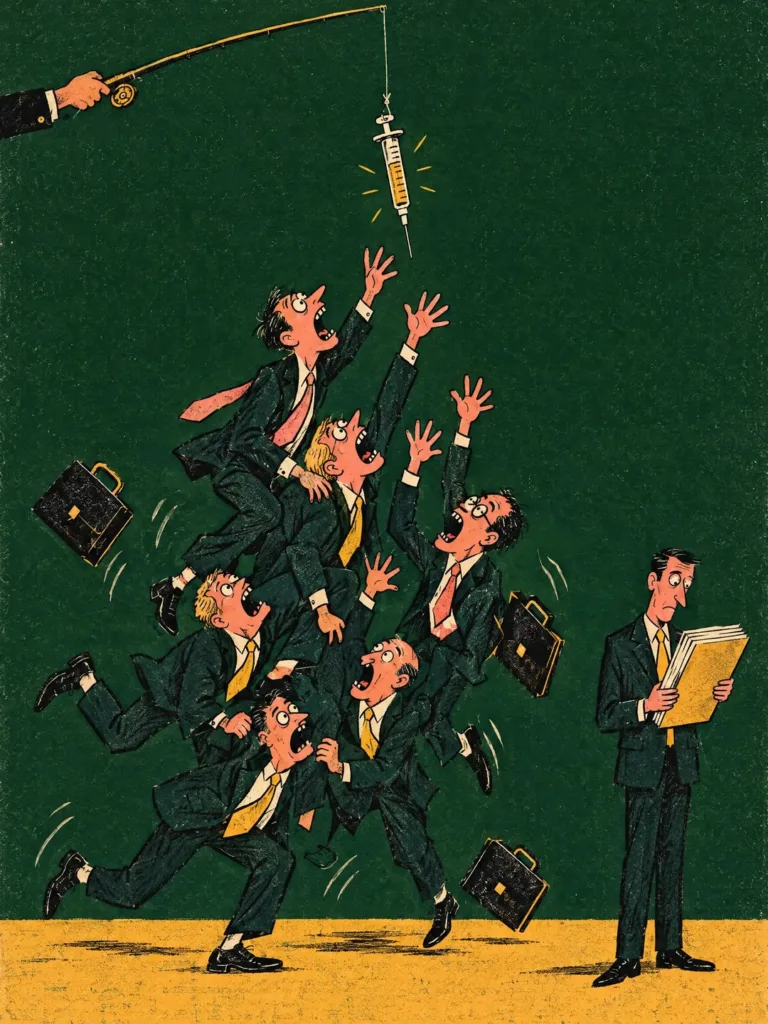
Per Reuters (February 2026), US investment bank Goldman Sachs sees global obesity-drug sales reaching $105 billion in 2030. That is down from an earlier forecast of $130 billion, because prices are falling more steeply and the way people use the drugs is changing. Obesity drugs that cost about $1,000 a month at launch now start at $149-$299 a month at US company direct prices, depending on product and dose.
Today's first-generation obesity drugs, Wegovy and Mounjaro, are both peptide drugs. The next war is a race to make these peptide drugs less frequent, easier and cheaper. A non-peptide pill from Lilly has now joined as a challenger.
- A peptide is a small key cut for a lock in the body
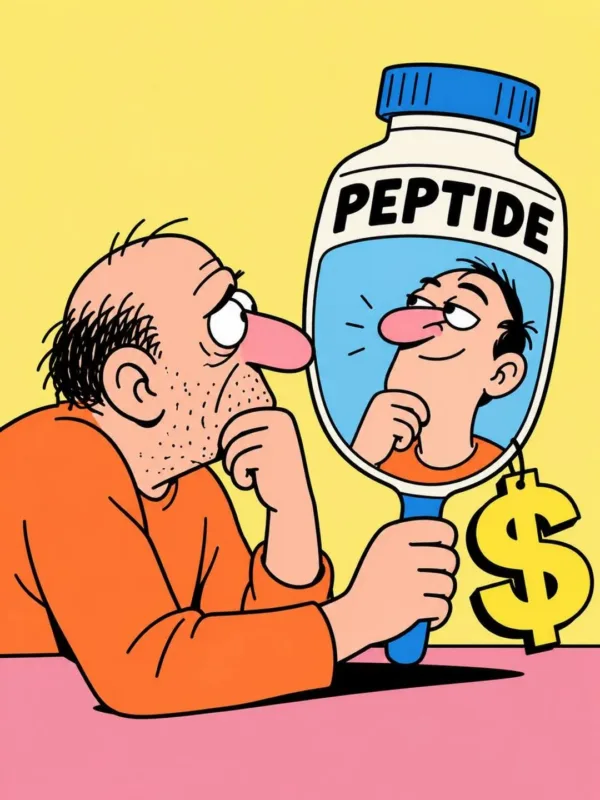
A peptide is a short chain of amino acids, the building blocks of proteins. Think of amino acids as Lego bricks: a protein is a big Lego build, and a peptide is a small key made from just a few bricks. Semaglutide and tirzepatide, the ingredients of GLP-1 drugs (the class of weight-loss drugs that includes Wegovy and Mounjaro), are both peptides.
Unlike Lego, though, a peptide gets broken into pieces by stomach acid and digestive enzymes once swallowed. That is why nearly all peptide drugs have been injected. Whoever solves this weakness first holds the key to the next round.
- The $100 billion is a number for the 'obesity drug' market
The $100 billion in the headline is a forecast for the obesity-drug market, not for all peptides. In the same Reuters report, Goldman Sachs put 2030 sales at $105 billion, Britain's HSBC at more than $120 billion by end-2030, and US investment bank Jefferies at an $80 billion peak. Jefferies had expected more than $100 billion in 2023 before cutting its forecast by 20%.
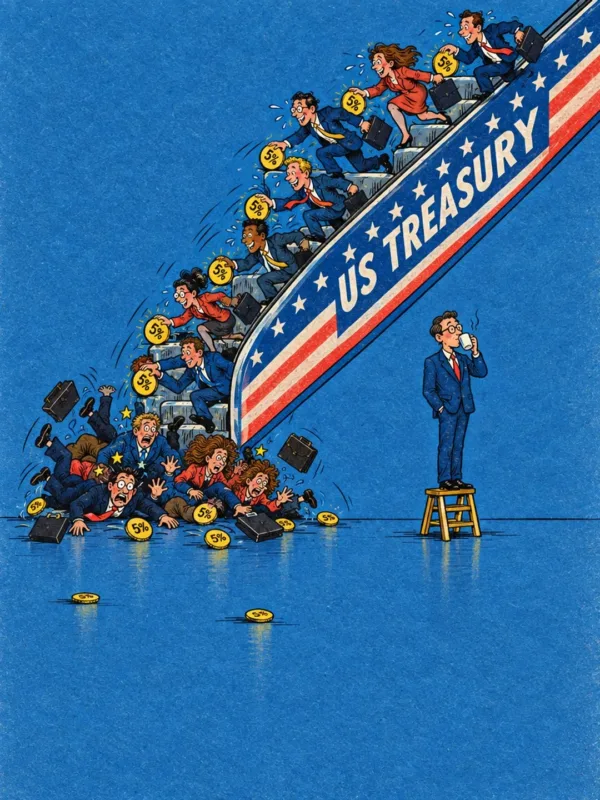
Put simply, even if more people use the drugs, cheaper prices per dose shrink forecasts of the market's size.
Company results split too. Lilly (the US drugmaker behind Mounjaro and Zepbound) grew Q2 2026 revenue 48% from a year earlier to $23 billion. Denmark's Novo Nordisk, maker of Wegovy, expects 2026 sales to fall 0-6% at constant exchange rates, citing a drug-price agreement with the US government (a pledge not to charge more than in other countries) and patent expiries in some countries.
- One drug is changing heart disease and the grocery cart
The effects reach beyond the scale. In the SELECT trial of more than 17,000 adults with heart disease and overweight or obesity, cardiovascular death, heart attack or stroke occurred in 6.5% of those on semaglutide versus 8.0% on placebo, a 20% lower risk (announced November 2023).
Food spending fell too. According to a Cornell University study, households that started a GLP-1 drug cut grocery spending by an average of 5.3% within six months. Spending on savory snacks fell about 10%, and on fast food and coffee shops about 8% (announced January 2026). Put simply, the more obesity drugs spread, the fewer customers snack and fast-food companies have.
- The fight will be won with 'one pill a day' and 'one shot a month'
Novo won US approval on Dec. 22, 2025, for the Wegovy pill, which puts a peptide into a tablet. Novo says more than 1 million Americans started taking it within four months of launch. Lilly won approval for its pill Foundayo on April 1, 2026. Foundayo is a non-peptide small-molecule synthetic drug. On Sept. 21, Lilly broke ground on a $6.5 billion Houston plant that will make ingredients for Foundayo and other small-molecule drugs, part of a $50 billion push for US production since 2020.
Injections are cutting the number of doses. Pfizer bought Metsera, a US biotech with a monthly-shot candidate, for $10 billion. In a phase 2 trial, the candidate's medium dose cut body weight 12.3% more than placebo at week 28. Amgen's (a US biotech) MariTide is in phase 3 trials, aiming for as few as 4-6 doses a year. In China, Innovent won approval on June 27, 2025, for mazdutide, whose China rights it licensed from Lilly.
Put simply, the next contest is about turning a once-a-week shot into something easier, and making it cheaply at scale.
- Korea has both a homegrown drug and tech-licensing hopefuls
Hanmi Pharm's in-house weekly obesity drug 'Epe' is awaiting Korean approval. The industry expects its factory price at around KRW 150,000 for a single starting dose. On the same basis, Wegovy is about KRW 210,000 and Mounjaro about KRW 270,000. In August, Mounjaro held 85% of Korea's market. In 2025, ahead of Mounjaro's Korean launch, Wegovy cut supply prices by 10-42%, a precedent showing that existing drug prices fall when latecomers arrive.
Peptron (a company whose technology makes injected drugs last longer) is in a technology evaluation with Lilly (a stage in which a big drugmaker tests a technology before a formal deal). The agreement ends by Oct. 7 at the latest, and as of Sept. 28 no formal deal had been decided. D&D Pharmatech transferred its oral peptide technology to Metsera in 2023. Pfizer dropped one pill candidate using that technology (disclosed Aug. 4), but in July it expanded its research contract with D&D by 37.8% and extended it to February 2028.
Inventage Lab released animal study results in June for a monthly shot made from Wegovy's ingredient. Samsung Biologics is running a tender offer through Oct. 12 to buy Polypeptide, a Swiss contract manufacturer of peptides, for about KRW 2.7 trillion.
- BITPRESS Insight
Forecasts for the obesity-drug market range from an $80 billion peak to more than $120 billion in 2030, depending on who you ask. Either way, as prices fall, companies must sell to far more people to earn the same revenue. So BITPRESS sees the next winner as likely to be the company that supplies 'less often, cheaper and more.'
There is a twist. In the peptide war, Lilly's pill is not a peptide. A peptide company's rivals are not only other peptides.
There are three tests. Is it approved and actually selling? Is it easier than a weekly shot? Does it have the factories or partners to make it at scale at lower prices? For Korean technology companies, the third test depends on a partner's signature, and until that signature turns into sales, the share price is a price on expectations.
Sources
https://finance.yahoo.com/news/analysis-obesity-market-sales-potential-110742804.html
https://www.health.harvard.edu/medications-and-treatments/peptides-what-they-are-potential-benefits-and-safety-concerns
https://www.labmanager.com/peptides-that-can-be-taken-as-a-pill-22670
https://www.prnewswire.com/news-releases/lilly-reports-second-quarter-2026-financial-results-raises-full-year-guidance-and-highlights-continued-growth-and-pipeline-progress-302843165.html
https://www.sec.gov/Archives/edgar/data/0000353278/000035327826000023/caq22026.htm
https://newsroom.clevelandclinic.org/2023/11/11/international-clinical-trial-finds-that-semaglutide-reduced-cardiovascular-events-by-20-in-adults-with-overweight-or-obesity-who-dont-have-diabetes
https://www.sciencedaily.com/releases/2026/01/260112001029.htm
https://www.novonordisk.com/content/nncorp/global/en/news-and-media/news-and-ir-materials/news-details.html?id=916472
https://www.sec.gov/Archives/edgar/data/0000353278/000117184326003634/f6k_052226.htm
https://www.prnewswire.com/news-releases/fda-approves-lillys-foundayo-orforglipron-the-only-glp-1-pill-for-weight-loss-that-can-be-taken-any-time-of-day-without-food-or-water-restrictions-302731485.html
https://www.prnewswire.com/news-releases/lilly-breaks-ground-in-houston-one-of-ten-us-manufacturing-sites-announced-since-2020-302885255.html
https://www.fiercebiotech.com/biotech/pfizers-10b-monthly-glp-1-bet-generates-competitive-weight-loss-phase-2b
https://www.biopharmadive.com/news/pfizer-obesity-metsera-phase-2-results-GLP1-monthly-shot/811201/
https://www.sec.gov/Archives/edgar/data/0000318154/000031815426000124/amgn-20260630earningsrelea.htm
https://www.prnewswire.com/news-releases/innovent-announces-mazdutide-first-dual-gcgglp-1-receptor-agonist-received-approval-from-chinas-nmpa-for-chronic-weight-management-302493152.html
https://news.bizwatch.co.kr/article/healthcare/2026/09/23/0033
https://www.leadeconomy.co.kr/news/articleView.html?idxno=9960
https://www.sedaily.com/article/20067584
https://www.newspim.com/news/view/20260805000345
https://www.sedaily.com/article/20053077
https://www.fnnews.com/news/202609161107549868
Glossary
Peptide — A short chain of amino acids, the building blocks of proteins; the ingredients of Wegovy and Mounjaro belong here.
GLP-1 — The name of the class of obesity and diabetes drugs, such as Wegovy and Mounjaro, used to lose weight and lower blood sugar.
Small-molecule synthetic drug — A drug made of small molecules through chemical reactions; Lilly's obesity pill Foundayo is one.
Technology evaluation agreement — An agreement in which a big drugmaker tests a smaller company's technology for a set period before a formal deal; a formal deal is not guaranteed when it ends.
Tender offer — A way of buying a company in which the buyer announces a period and price and buys shares from shareholders all at once.
BITPRESS articles are information to help your investment decisions, not a recommendation to buy or sell any stock or coin. Investment decisions and their results are your own responsibility.